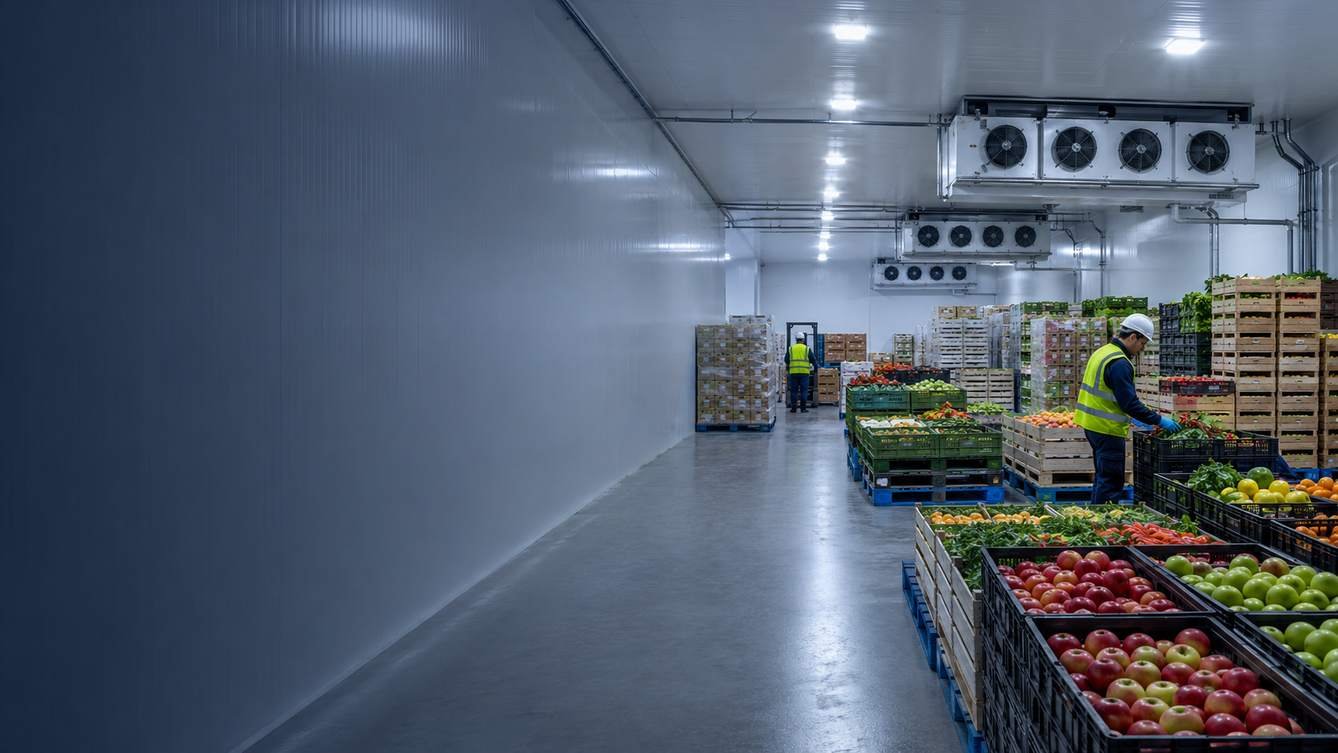
Industrial fruit and vegetable cold storage facility
Built for packhouses, farms & distributors

POST-HARVEST COLD STORAGE SOLUTIONS

Cold Rooms for
Fruit & Vegetables

Protect saleable quality from harvest to dispatch with cold-room systems engineered around crop temperature, humidity, airflow and turnover.

✓ Crop-specific setpoints ✓ Humidity-aware airflow design ✓ Single-room and multi-zone layouts
Crop-Specific SetpointsTemperature ranges matched to the produce profile
Humidity-Aware AirflowMove heat without unnecessary moisture loss
Single or Multi-ZoneKeep incompatible crops from sharing one environment
Pre-Cooling ReadyPlan the route from receiving to dispatch

PRODUCE IS STILL LIVING AFTER HARVEST

Your produce is still breathing after harvest.

Fruit and vegetables continue to respire, release heat and exchange moisture after harvest. Variety, maturity, packaging and storage duration all change the refrigeration duty.

We turn those operating details into a practical cold-room concept for receiving, field-heat removal, stable holding and dispatch—so the system protects quality without treating every crop the same way.

01 / CROP PROFILEWhat are you storing?

Produce type, variety, maturity, ethylene behavior and target shelf life.

02 / LOAD PROFILEHow much arrives?

Daily intake, field temperature, packaging, pallet pattern and peak season.

03 / OPERATING PROFILEHow will the room run?

Pre-cooling, door traffic, staging, dispatch timing and available power supply.

PRESERVATION APPROACHES

Choose the room type by crop behavior—not room size alone.

Turnover speed, moisture sensitivity, ethylene response and holding time determine which configuration makes commercial sense for your operation.

01

DAILY TURNOVER

Fresh Produce Chiller

For produce that moves quickly through packhouses, wholesale markets and distribution centers, with storage conditions selected around the actual crop mix.

  • Typical room range: 0°C to +15°C
  • Produce-friendly air distribution
  • Flexible daily loading patterns
Ask about this room type
02

MOISTURE RETENTION

High-Humidity Storage Room

For leafy greens and other moisture-sensitive crops where excessive air movement or a large coil temperature difference can reduce saleable weight and appearance.

  • Humidity-conscious coil selection
  • Low-velocity airflow options
  • Condensation-aware control
Ask about this room type
03

EXTENDED HOLDING

Controlled Atmosphere Room

For selected crops and longer storage programs that require coordinated temperature, humidity, oxygen and carbon-dioxide management.

  • Gas-tight room options
  • Atmosphere monitoring
  • Crop-specific operating sequence
Ask about this room type
04

INCOMPATIBLE CROPS

Multi-Zone Produce Store

Independent zones keep products with different temperature, humidity, odor or ethylene behavior from compromising one another.

  • Separate room setpoints
  • Ethylene-sensitive zoning
  • Seasonal capacity planning
Ask about this room type

FOUR PRODUCE-SPECIFIC RISKS

Cold is only one part of fresh-produce preservation.

A useful design considers how the crop reacts to temperature, moisture and the shared room atmosphere.

01

Respiration Heat

Fresh produce remains biologically active after harvest. Crop type, maturity and incoming temperature change the cooling duty.

02

Moisture Loss

Coil temperature, fan speed, packaging and airflow all influence weight loss, wilting and surface quality.

03

Ethylene Interaction

Ethylene-producing crops can accelerate ripening or damage sensitive products when they share the same air.

04

Chilling Injury

Some tropical and subtropical crops deteriorate when stored colder than their safe range—even when they do not freeze.

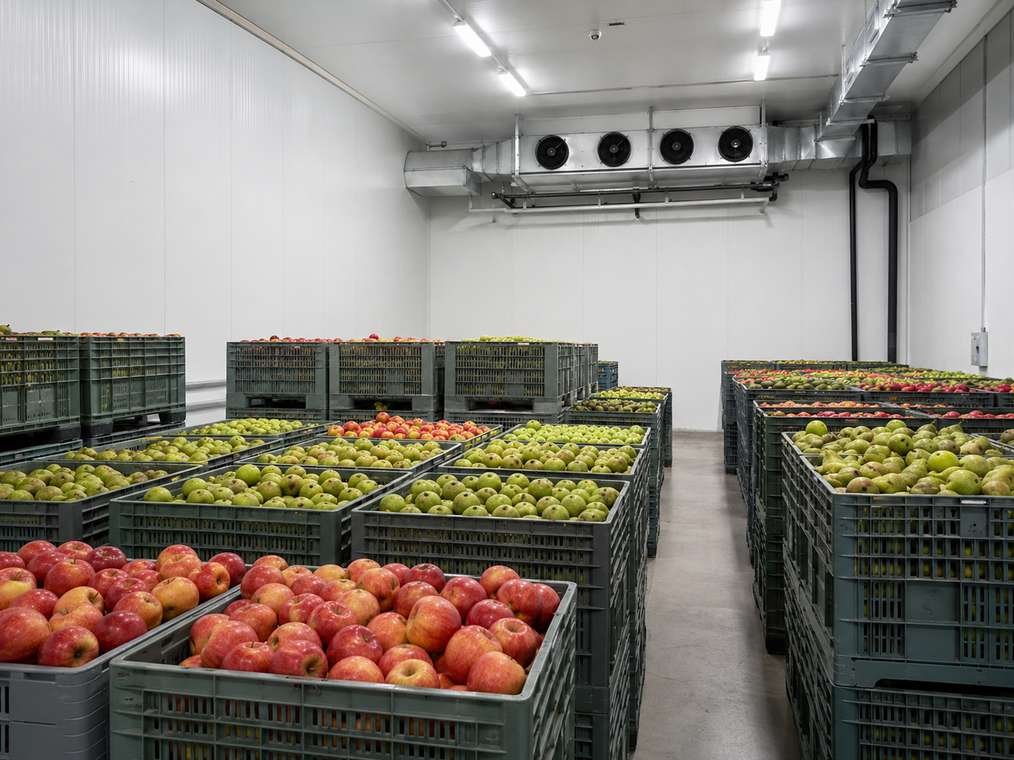
Crated fruit stored in a commercial cold room

THE STORAGE MICROCLIMATE

Protect the load, not only the setpoint.

01

Coil temperature differenceA more suitable coil approach can help reduce unnecessary dehumidification.

02

Air path through the loadAisles, pallet spacing and packaging openings influence cooling uniformity.

03

Fan operationAir velocity and fan cycling can be adjusted for crop sensitivity and room usage.

04

Condensation controlDoor practice, defrost and staging conditions help limit wet surfaces and temperature shock.

Discuss your crop list and loading pattern →

PRELIMINARY CROP PLANNER

Start with compatibility before combining products.

These ranges are for early planning only. Final conditions depend on variety, maturity, packaging, storage period and local post-harvest practice.

Early planning ranges only. Final conditions depend on crop variety, maturity, packaging, storage period and local post-harvest practice.
Produce groupTypical room rangeHumidity priorityMain preservation concern
Leafy vegetables0°C to +5°CVery highLimit moisture loss; use gentle, even airflow
Apples & pears0°C to +4°CHighPlan for ethylene and intended storage duration
Citrus fruit+3°C to +10°CModerate–highSetpoint depends on crop, variety and maturity
Tropical fruit+7°C to +14°CModerate–highAvoid chilling injury from temperatures that are too low
Potatoes & onions+2°C to +10°CCrop-specificCoordinate curing, ventilation and sprout control
Important: verify temperature, humidity, odor and ethylene compatibility before sharing a room. Separate zones are often preferable for mixed produce.

FROM HARVEST HEAT TO DISPATCH

Plan the complete temperature journey.

Stable storage works best when receiving and dispatch practices are considered from the beginning.

01

Receiving

Record crop, maturity, field temperature, packaging and arrival condition.

02

Pre-Cooling

Remove field heat at a rate the produce and packaging can tolerate.

03

Stable Storage

Hold the selected temperature and humidity with uniform, crop-friendly airflow.

04

Dispatch

Limit temperature rebound and condensation during staging and loading.

TURN A CROP LIST INTO A ROOM PLAN

Give each crop the environment it needs.

A produce schedule often reveals conflicts that room volume alone cannot show. We use your crop mix and seasonality to identify practical zones and operating priorities.

  • Crop and variety list by season
  • Daily receiving volume and field temperature
  • Packaging, pallet pattern and intended holding time
  • Ethylene-producing and ethylene-sensitive products
  • Pre-cooling, staging and dispatch requirements
Send Your Produce Requirements
Cold room specialists reviewing produce storage requirements

PRODUCE STORAGE FAQ

Questions that affect freshness and shelf life.

The answers depend on the crop and operating routine, so final selections should follow a project-specific review.

Why can’t every fruit and vegetable use the same setpoint?+

Different crops respond differently to low temperature, humidity and ethylene. A setting that benefits one product may cause chilling injury, dehydration or accelerated ripening in another.

Can mixed produce be stored in one cold room?+

Only when temperature, humidity, odor and ethylene behavior are compatible. If the crop mix changes seasonally, independent zones or a clear storage schedule are usually safer.

How do you reduce dehydration inside a produce cold room?+

We review coil temperature difference, fan selection, air velocity, packaging, door traffic and product arrangement. Humidity performance comes from the complete operating system, not one component alone.

Do freshly harvested products need pre-cooling?+

Often yes. Pre-cooling removes field heat before longer-term storage, but the suitable method and cooling rate depend on the crop, packaging and post-harvest process.

What project details should I send?+

Share crop varieties, room dimensions, daily incoming quantity, incoming temperature, target condition, storage duration, packaging, installation location and power supply.

PLAN YOUR PRODUCE COLD ROOM

Let’s design the right room for your crop.

Share the crop list, room dimensions, daily loading, incoming temperature, target condition, storage duration, country and power supply. We will use those details to prepare the next technical discussion.

Go to Inquiry Page
Don’t Miss Out the Best Partner!

Ready to Work With Us?

We customize the superior refrigeration products based on your idea or suggestion since 2010