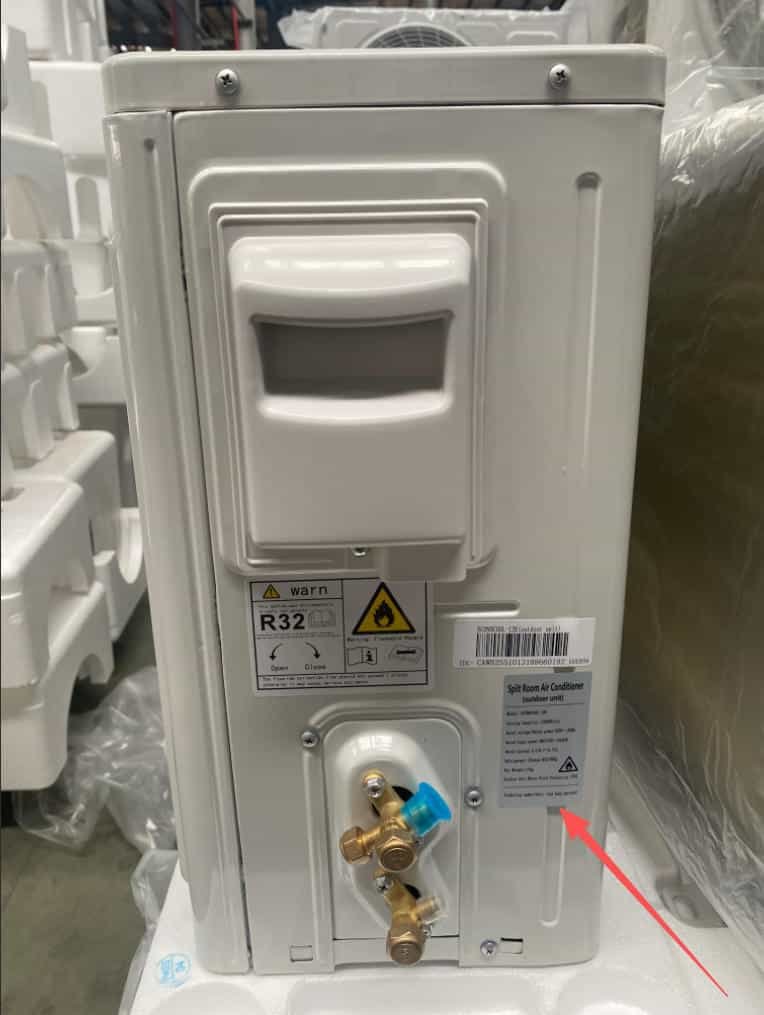
Surat berikutnya:
-
G: Mewakili unit dalaman yang dipasang di dinding (Unit kabinet adalah “L”)
-
W: Mewakili unit luaran
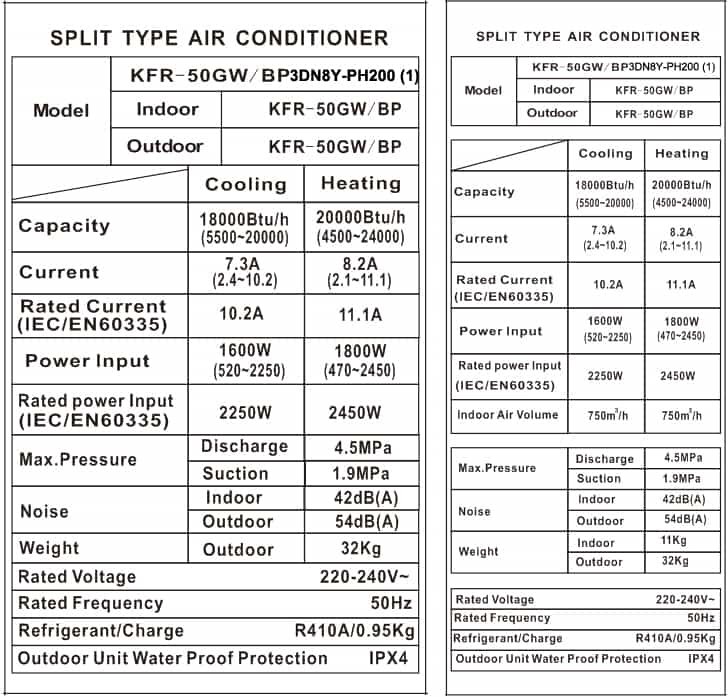
Kod fungsi tambahan (cth., BP3DN8Y):
-
BP: Penyongsang (model penghawa dingin bukan inverter tidak mempunyai pengenal ini)
-
3D: Mewakili aliran udara 3D atau kawalan suhu pintar
-
N: Mewakili penyejuk mesra alam (cth., R410A atau R32)
-
Y: Fungsi kawalan jauh
Label kecekapan tenaga (cth., PH200 (1)):
-
Nombor “1” mewakili tahap 1 Kecekapan Tenaga (Tahap yang lebih rendah menunjukkan penjimatan tenaga yang lebih tinggi).
Kapasiti penyejukan/pemanasan: Unit adalah w. Nilai yang lebih tinggi menunjukkan kemampuan penyejukan/pemanasan yang lebih kuat (cth., Kapasiti penyejukan 5000W, Kapasiti pemanasan 5500W).
Input kuasa penyejukan/pemanasan: Unit adalah w. Mewakili penggunaan kuasa semasa operasi penyejukan/pemanasan (Input kuasa yang lebih rendah bermaksud penjimatan tenaga yang lebih tinggi. Ini harus dinilai bersama dengan penarafan kecekapan tenaga untuk penilaian yang lebih tepat).
Kuasa pemanasan elektrik tambahan: Beberapa penghawa dingin memerlukan pemanasan elektrik tambahan semasa mod pemanasan. Unit adalah w. Penggunaan kuasa ini tambahan.
Kapasiti: Penyejukan 18,000btu/h bermaksud kapasiti penyejukan yang diberi nilai (BTU adalah unit tenaga untuk mengukur penghawa dingin), 5,500~ 20,000btu/h bermaksud penyimpangan penyejukan udara skop kapasiti pada suhu ambien yang berbeza (penghawa dingin bukan inverter tidak skop ini).
Semasa: Penyejukan 7.3A bermaksud semasa operasi lancar pada mod penyejukan, 2.4~ 10.2a bermaksud penyejuk udara penyejukan skop semasa pada suhu ambien yang berbeza (penghawa dingin bukan inverter tidak skop ini).
IEC/EN60335: Standard antarabangsa untuk penghawa dingin dengan prestasi yang sangat baik.
Nisbah kecekapan tenaga (APF/SCOP):
-
Untuk penghawa dingin penyongsang, Rujuk APF (Faktor prestasi tahunan).
-
Untuk penghawa dingin bukan inverter, Rujuk kepada EER (Nisbah kecekapan tenaga).
Nilai yang lebih tinggi menunjukkan kecekapan tenaga yang lebih baik (Biasanya, Tahap 1 Kecekapan tenaga memerlukan APF ≥ 4.5).

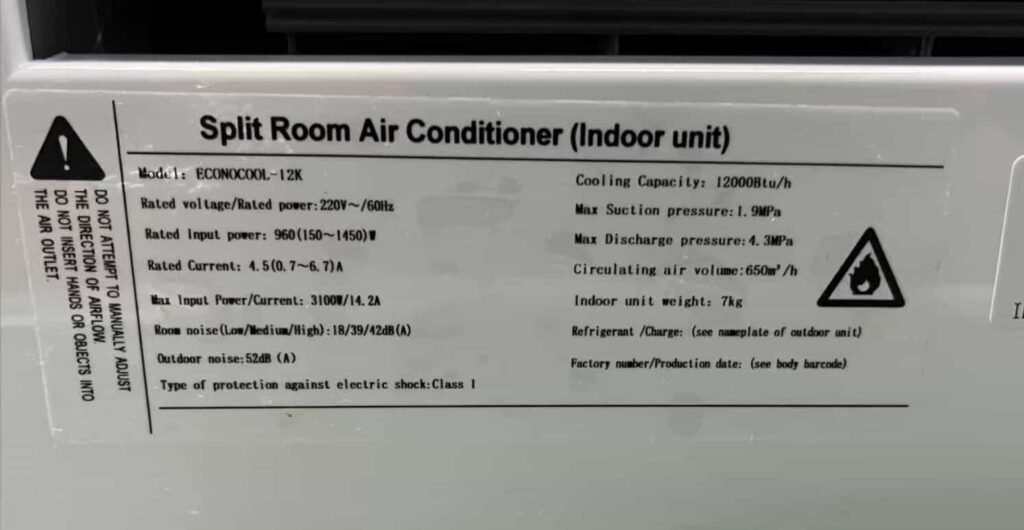
Maks. Tekanan pelepasan (Sisi tinggi): 4.5 MPa
Maks. Sedutan tekanan (sisi rendah): 1.9 MPa
Caj penyejuk: Maksimum mengisi berat badan
Apakah Maksud KFR pada Penghawa Dingin?
Nombor model biasanya bermula dengan “Kfr” yang merupakan penamaan biasa dalam sistem seperti piawaian GB China. Berikut adalah kerosakan:
-
K: Bermaksud “Penghawa Dingin”
-
F: Bermaksud “Jenis Split” Ini menunjukkan unit mempunyai unit dalaman dan luaran yang berasingan.
-
R: Bermaksud “Pam haba.” Ini bermaksud unit dapat menyediakan penyejukan dan pemanasan.
Oleh itu, “Kfr” Menetapkan penghawa dingin pam haba split.
Model yang hanya ada “Kf” akan menjadi sistem perpecahan yang menyejukkan sahaja. Nombor -nombor yang mengikuti huruf -huruf ini sering menunjukkan kapasiti penyejukan (lihat di atas).
Kfrd: The “d” mewakili pemanasan elektrik tambahan, bermaksud bahawa sebagai tambahan kepada pam haba, Ia juga menyokong pemanasan elektrik tambahan untuk meningkatkan prestasi pemanasan.
Kc: Mewakili penghawa dingin yang dipasang di tingkap, yang merupakan unit tunggal yang mengintegrasikan bahagian dalaman dan luaran, dan dipasang di tingkap.
Nombor Model lwn Nombor Siri: Apa Perbezaannya?
Ramai orang mengelirukan nombor model dengan nombor siri, tetapi mereka tidak sama.
Nombor model mengenal pasti keluarga produk, reka bentuk, dan konfigurasi. Ia berguna untuk pemilihan produk, pengenalan alat ganti, dan rujukan teknikal am.
Nombor siri mengenal pasti satu unit tertentu. Ia digunakan terutamanya untuk kebolehkesanan, jaminan, rekod pembuatan, dan sejarah perkhidmatan.
Jika anda menghubungi pembekal atau pasukan perkhidmatan, selalunya terbaik untuk memberikan kedua-dua nombor model dan nombor siri.
Mengapa Papan Nama Penting kepada Pengguna Berbeza
Papan nama yang sama boleh berguna kepada orang yang berbeza atas sebab yang berbeza.
Untuk Pemilik Rumah
Pemilik rumah biasanya ingin mengetahui jenis AC yang mereka ada, apakah bahan pendingin yang digunakannya, berapakah kapasitinya, dan sama ada unit mempunyai penyejukan sahaja atau kedua-dua penyejukan dan pemanasan.
Untuk Pembeli dan Pengimport
Pembeli dan pengimport sering menumpukan pada identiti model, voltan, kekerapan, bahan penyejuk, pensijilan, dan kebolehkesanan. Butiran ini membantu mengesahkan sama ada produk itu sesuai untuk pasaran sasaran.
Untuk Pemasang
Pemasang perlu mengesahkan keperluan bekalan kuasa, pemadanan sistem, dan spesifikasi operasi utama sebelum pemasangan. Papan nama membantu mengurangkan kesilapan keserasian.
Untuk Juruteknik
Juruteknik menggunakan papan nama untuk mengenal pasti unit yang tepat, sahkan jenis penyejuk, semak data elektrik, semak had tekanan, dan menyokong penyelesaian masalah atau padanan alat ganti.
Kesilapan Biasa Semasa Membaca Papan Nama Penghawa Dingin
Berikut adalah beberapa kesilapan yang paling biasa:
-
Mengelirukan nombor model dengan nombor siri
-
Dengan mengandaikan semua jenama menggunakan logik pengekodan yang sama
-
Kapasiti penyejukan pemikiran adalah sama dengan penggunaan kuasa elektrik
-
Melihat hanya satu label apabila kedua-dua unit dalaman dan luaran harus diperiksa
-
Mengabaikan voltan, kekerapan, atau maklumat fasa
-
Melayan markah pensijilan sebagai penilaian prestasi
Perkara yang Tidak Dapat Diberitahu oleh Papan Nama kepada Anda
Malah papan nama terperinci tidak mengandungi segala-galanya.
Sebagai contoh, papan nama biasanya tidak menerangkan sepenuhnya:
-
Panjang paip maksimum
-
Perbezaan ketinggian maksimum
-
Prestasi tekanan statik
-
Keluk aliran udara
-
Logik nyahbeku
-
Prestasi pemanasan persekitaran yang rendah
-
Keadaan ujian bunyi
-
Prosedur penyelesaian masalah penuh
Untuk butiran tersebut, pengguna harus merujuk manual pemasangan, lembaran spesifikasi produk, atau manual perkhidmatan.
Soalan Lazim
S1: Apakah papan nama penghawa dingin?
Ia ialah label pengenalan yang dilampirkan pada unit yang menunjukkan maklumat teknikal dan produk utama.
S2: Di manakah papan nama pada unit AC?
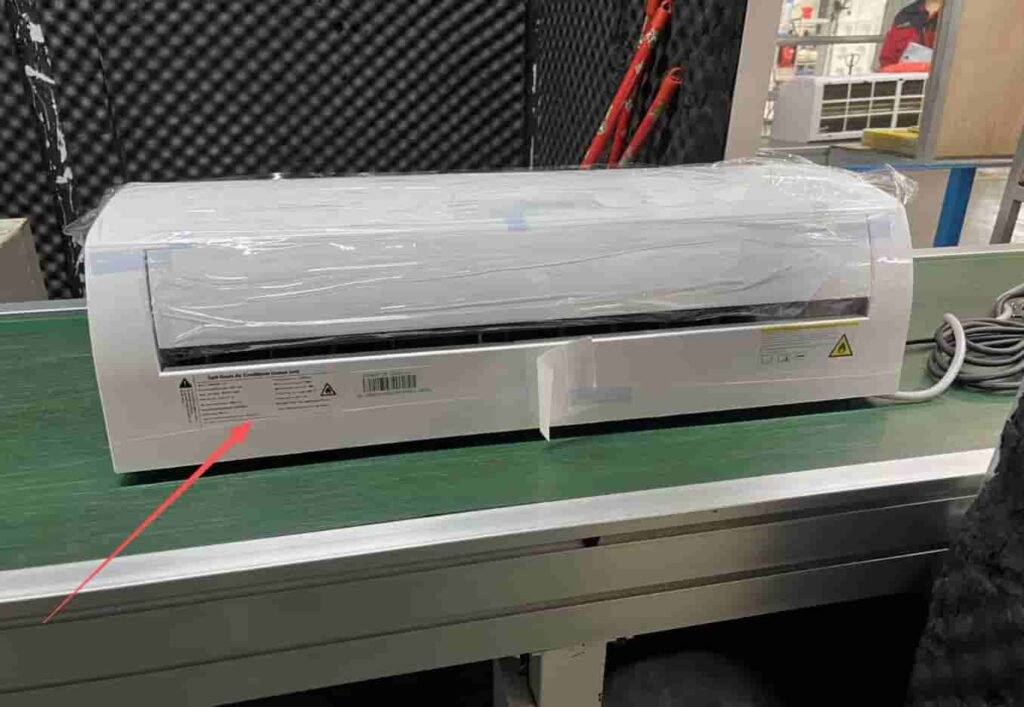
Ia selalunya terletak di sebelah, belakang, atau kawasan panel servis unit. Sistem pisah mungkin mempunyai label pada kedua-dua unit dalaman dan luaran.
S3: Adakah nombor model sama dengan nombor siri?
Tidak. Nombor model mengenal pasti jenis atau siri produk, manakala nombor siri mengenal pasti unit individu.
S4: Apakah maksud KFR?
Dalam banyak sistem penamaan Cina, KFR merujuk kepada a “penghawa dingin pam haba jenis split”.
S5: Bolehkah saya mengenal pasti bahan pendingin daripada papan nama?
ya. Dalam kebanyakan kes, jenis penyejuk disenaraikan pada papan nama, seperti R32 atau R410A.
S6: Adakah papan nama menunjukkan penggunaan kuasa?
Biasanya ya. Ia mungkin menunjukkan kuasa input undian dan arus undian, tetapi ini tidak boleh dikelirukan dengan kapasiti penyejukan.
S7: Bolehkah saya menggunakan papan nama untuk mencari alat ganti?
ya. Nombor model dan nombor siri sering diperlukan semasa menyemak keserasian alat ganti.
S8: Adakah semua nombor model AC dinyahkod dengan cara yang sama?
Tidak. Struktur nombor model berbeza mengikut pengeluar, barisan produk, dan pasaran.
Kesimpulan
Memahami Parameter Parameter Penghawa dingin adalah kemahiran asas bagi kedua -dua pengguna dan kakitangan pemasangan atau penyelenggaraan.
Setiap sekeping data di papan nama mencerminkan prestasi unit, keselamatan, dan tahap penggunaan tenaga.
Hanya dengan benar -benar memahami parameter ini, anda boleh memilih model yang betul, Pasang dengan betul, dan menggunakannya dengan cekap -yang membolehkan penghawa dingin untuk memberikan prestasi yang optimum dan menikmati hayat perkhidmatan yang lebih lama.