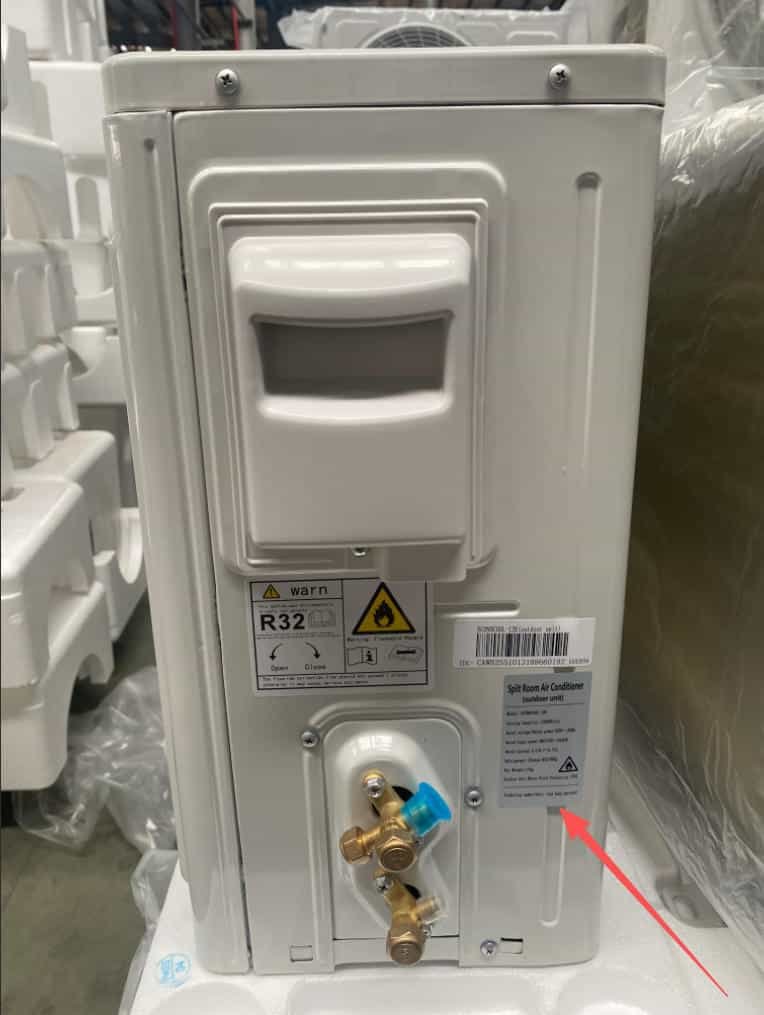
Volgende brieven:
-
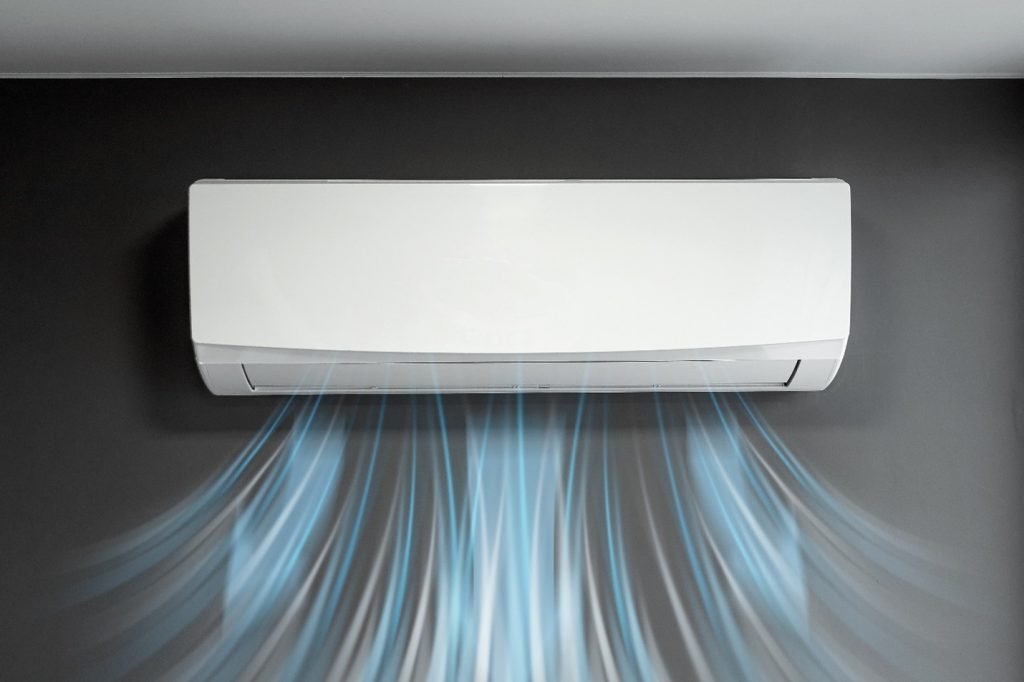
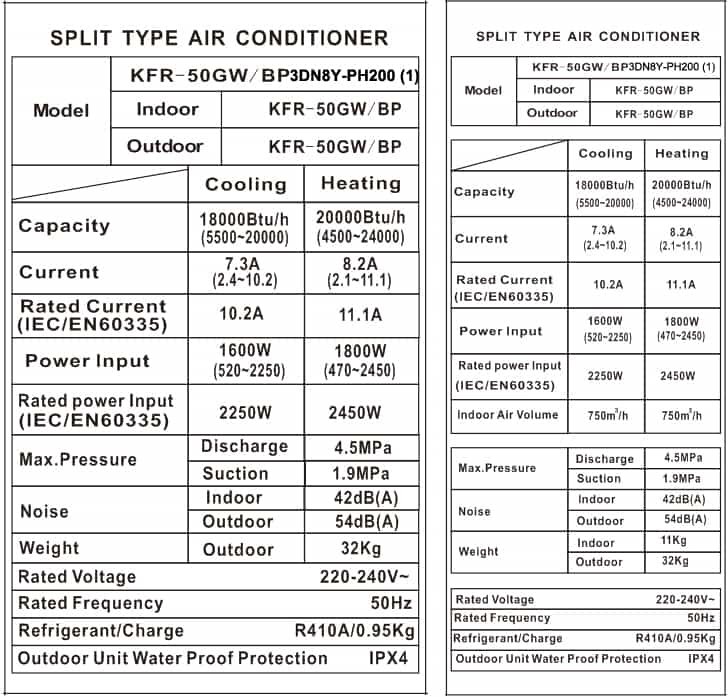
G: Vertegenwoordigt wandgemonteerde binnenunit (Kasteenheid is “L”)
-
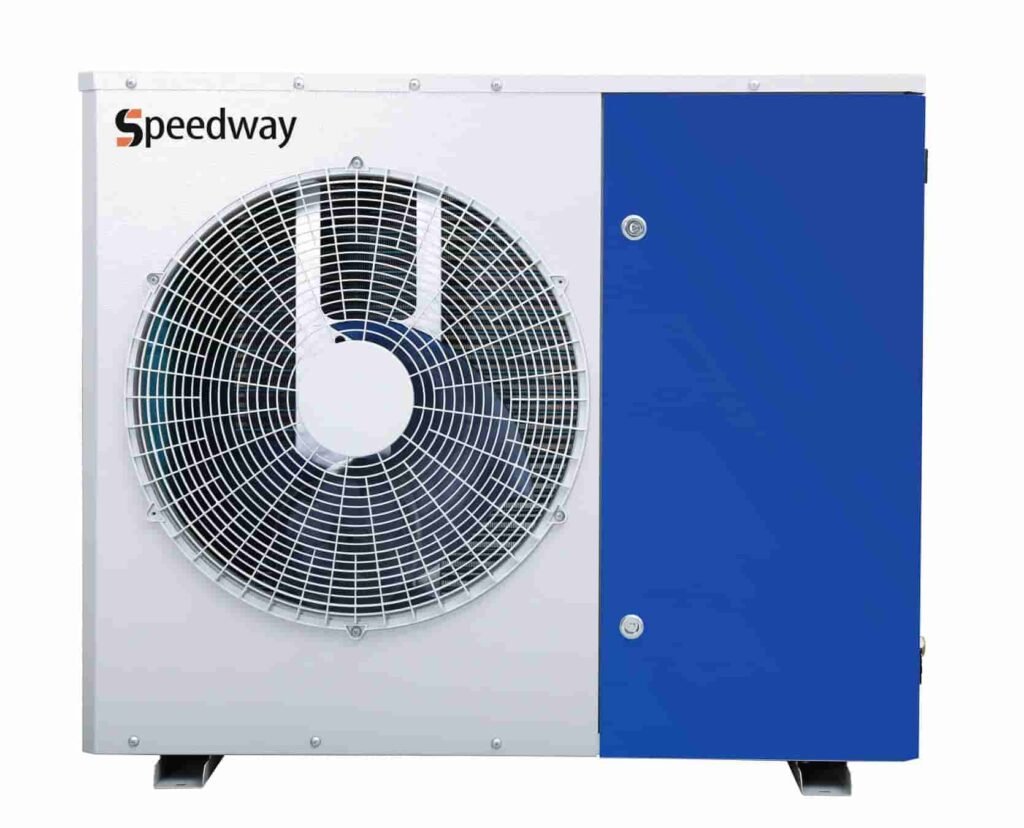
W: Vertegenwoordigt buitenunit
Extra functiecodes (bijv., BP3DN8Y):
-
BP: Omvormer (Airconditionermodellen zonder inverter hebben deze identificatie niet)
-
3D: Vertegenwoordig 3D-luchtstroom of intelligente temperatuurregeling
-
N: Vertegenwoordig milieuvriendelijk koelmiddel (bijv., R410a of R32)
-
Y: Afstandsbediening functie
Energie-efficiëntielabel (bijv., PH200 (1)):
-
Het nummer “1” vertegenwoordigt niveau 1 Energie-efficiëntie (Een lager niveau duidt op een hogere energiebesparing).
Koel-/verwarmingscapaciteit: Eenheid is W. Een hogere waarde duidt op een sterker koel-/verwarmingsvermogen (bijv., Koelvermogen 5000W, Verwarmingscapaciteit 5500W).
Opgenomen vermogen voor koeling/verwarming: Eenheid is W. Vertegenwoordigt het energieverbruik tijdens koelen/verwarmen (Een lager energieverbruik betekent een hogere energiebesparing. Voor een nauwkeurigere beoordeling moet dit samen met de energie-efficiëntiebeoordeling worden geëvalueerd).
Extra elektrisch verwarmingsvermogen: Sommige airconditioners hebben tijdens de verwarmingsmodus elektrische extra verwarming nodig. Eenheid is W. Dit stroomverbruik is extra.
Capaciteit: Koeling 18.000 btu/u betekent nominaal koelvermogen (btu is een energie-eenheid om airconditioners te meten), 5,500~20.000 btu/u betekent dat de koelcapaciteit van de INVERTER-airconditioner bij verschillende omgevingstemperaturen aanwezig is (non-inverter airconditioner niet van deze omvang).
Huidig: Koeling 7,3 A betekent een soepele bedrijfsstroom in de koelmodus, 2.4~10,2A betekent dat de koelstroom van de INVERTER-airconditioner bij verschillende omgevingstemperaturen kan worden gekoeld (non-inverter airconditioner niet van deze omvang).
IEC/EN60335: Internationale standaard voor airconditioners met uitstekende prestaties.
Energie-efficiëntieverhouding (APF/SCOP):
-
Voor inverter-airconditioners, zie APF (Jaarlijkse prestatiefactor).
-
Voor airconditioners zonder inverter, zie EER (Energie-efficiëntieverhouding).
Een hogere waarde duidt op een betere energie-efficiëntie (Typisch, Niveau 1 Energie-efficiëntie vereist een APF ≥ 4.5).

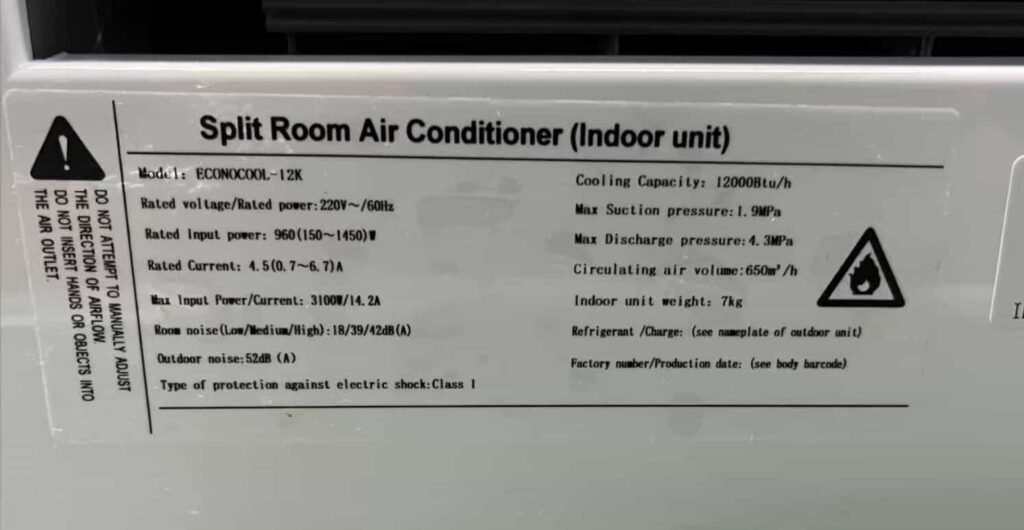
Max. Drukontlading (hoge kant): 4.5 MPa
Max. Druk zuiging (lage kant): 1.9 MPa
Koelmiddelvulling: Maximaal vulgewicht
Wat betekent KFR op een airconditioner?
Het modelnummer begint meestal met “KFR” wat een veel voorkomende aanduiding is in systemen zoals de Chinese GB-normen. Hier is een uitsplitsing:
-
K: Staat voor “Airco”
-
F: Staat voor “Gesplitst type” Dit geeft aan dat de unit aparte binnen- en buitenunits heeft.
-
R: Staat voor “Warmtepomp.” Dit betekent dat de unit zowel kan koelen als verwarmen.
Daarom, “KFR” duidt op een split-type warmtepomp-airconditioner.
Een model dat alleen maar heeft “KF” zou een split-systeem zijn dat alleen koelt. De cijfers na deze letters geven vaak het koelvermogen aan (zie hierboven).
Kfrd: De “D” vertegenwoordigt aanvullende elektrische verwarming, dat wil zeggen naast de warmtepomp, het ondersteunt ook elektrische hulpverwarming om de verwarmingsprestaties te verbeteren.
KC: Vertegenwoordigt een op een raam gemonteerde airconditioner, Dit is een enkele unit waarin zowel de binnen- als de buitensectie zijn geïntegreerd, en in een raam geïnstalleerd.
Modelnummer versus serienummer: Wat is het verschil?
Veel mensen verwarren het modelnummer met het serienummer, maar ze zijn niet hetzelfde.
Het modelnummer identificeert de productfamilie, ontwerp, en configuratie. Het is handig voor productselectie, identificatie van reserveonderdelen, en algemene technische referentie.
Het serienummer identificeert één specifieke eenheid. Het wordt voornamelijk gebruikt voor traceerbaarheid, garantie, productieregistraties, en servicegeschiedenis.
Als u contact opneemt met een leverancier of serviceteam, Vaak is het het beste om zowel het modelnummer als het serienummer op te geven.
Waarom het naamplaatje belangrijk is voor verschillende gebruikers
Hetzelfde naamplaatje kan om verschillende redenen nuttig zijn voor verschillende mensen.
Voor huiseigenaren
Huiseigenaren willen meestal weten welk type airco ze hebben, welk koelmiddel er wordt gebruikt, wat de capaciteit is, en of de unit alleen koeling heeft of zowel koeling als verwarming.
Voor kopers en importeurs
Kopers en importeurs richten zich vaak op modelidentiteit, Spanning, frequentie, koelmiddel, certificeringen, en traceerbaarheid. Deze details helpen bevestigen of het product geschikt is voor een doelmarkt.
Voor installateurs
Installateurs moeten de vereisten voor de stroomvoorziening verifiëren, systeemmatching, en belangrijke bedrijfsspecificaties vóór installatie. Het naamplaatje helpt compatibiliteitsfouten te verminderen.
Voor technici
Technici gebruiken het typeplaatje om de exacte eenheid te identificeren, controleer het type koelmiddel, elektrische gegevens controleren, controleer de druklimieten, en ondersteuning bij het oplossen van problemen of het matchen van reserveonderdelen.
Veelgemaakte fouten bij het lezen van het typeplaatje van een airconditioner
Hier zijn enkele van de meest voorkomende fouten:
-
Het modelnummer verwarren met het serienummer
-
Ervan uitgaande dat alle merken dezelfde coderingslogica gebruiken
-
Denken aan koelvermogen is hetzelfde als elektrisch stroomverbruik
-
We kijken naar slechts één label wanneer zowel binnen- als buitenunits moeten worden gecontroleerd
-
Spanning negeren, frequentie, of fase-informatie
-
Certificatiemerken behandelen als prestatiebeoordelingen
Wat het naamplaatje u niet kan vertellen
Zelfs een gedetailleerd naamplaatje bevat niet alles.
Bijvoorbeeld, het typeplaatje geeft meestal geen volledige verklaring:
-
Maximale leidinglengte
-
Maximaal hoogteverschil
-
Prestaties bij statische druk
-
Luchtstroomcurven
-
Ontdooilogica
-
Lage verwarmingsprestaties bij omgevingstemperatuur
-
Geluidstestomstandigheden
-
Volledige probleemoplossingsprocedures
Voor die details, gebruikers moeten de installatiehandleiding raadplegen, productspecificatieblad, of servicehandleiding.
Veelgestelde vragen
Q1: Wat is het typeplaatje van een airconditioner??
Het is het identificatielabel dat op het apparaat is bevestigd en dat belangrijke technische en productinformatie weergeeft.
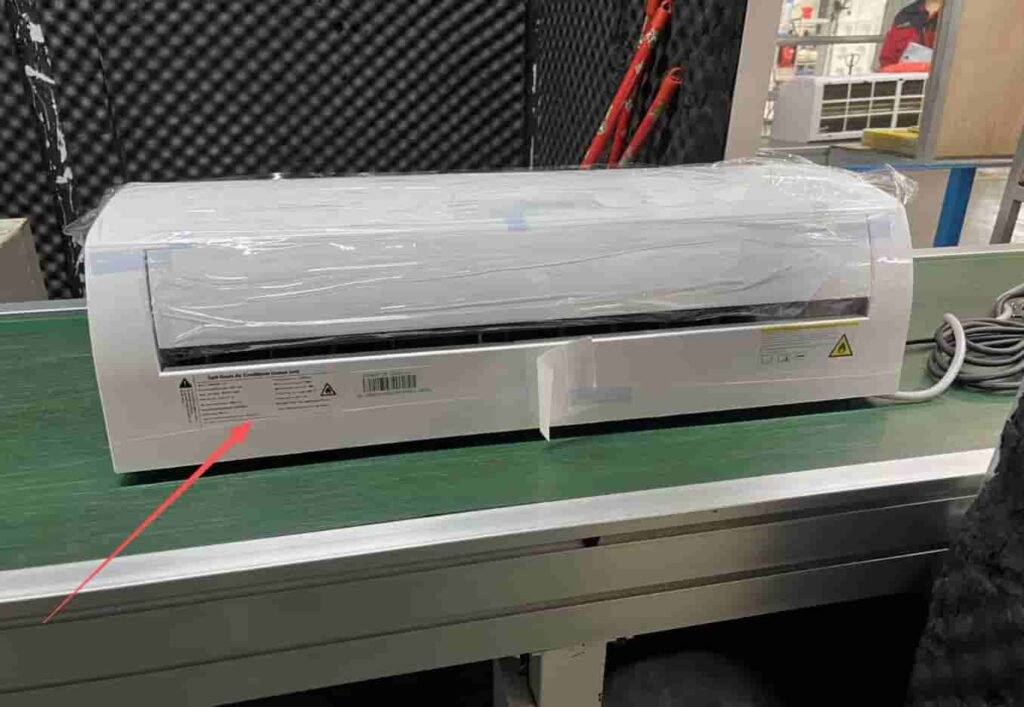
Q2: Waar bevindt zich het naamplaatje op een AC-unit??
Het bevindt zich vaak aan de zijkant, rug, of servicepaneelgebied van de unit. Split-systemen kunnen labels hebben op zowel de binnen- als de buitenunit.
Q3: Is het modelnummer hetzelfde als het serienummer??
Nee. Het modelnummer identificeert het producttype of de serie, terwijl het serienummer de individuele eenheid identificeert.
Q4: Wat betekent KFR??
In veel Chinese naamgevingssystemen, KFR verwijst naar een “split-type warmtepomp-airconditioner”.
Q5: Kan ik het koelmiddel identificeren aan de hand van het typeplaatje??
Ja. In de meeste gevallen, het type koelmiddel staat vermeld op het typeplaatje, zoals R32 of R410A.
Vraag 6: Geeft het typeplaatje het stroomverbruik weer??
Meestal wel. Het kan het nominale ingangsvermogen en de nominale stroom weergeven, maar deze moeten niet worden verward met koelcapaciteit.
Vraag 7: Kan ik het typeplaatje gebruiken om reserveonderdelen te vinden??
Ja. Het modelnummer en serienummer zijn vaak nodig bij het controleren van de compatibiliteit van reserveonderdelen.
Vraag 8: Worden alle AC-modelnummers op dezelfde manier gedecodeerd??
Nee. Modelnummerstructuren variëren per fabrikant, productlijn, en markt.
Conclusie
Het begrijpen van de parameters op het typeplaatje van een airconditioner is een fundamentele vaardigheid voor zowel gebruikers als installatie- of onderhoudspersoneel.
Elk stukje gegevens op het typeplaatje weerspiegelt de prestaties van het apparaat, veiligheid, en energieverbruiksniveau.
Alleen door deze parameters echt te begrijpen, kunt u het juiste model selecteren, installeer het op de juiste manier, en efficiënt gebruiken, waardoor de airconditioner optimale prestaties kan leveren en een langere levensduur heeft.