Flowers lose value fast when storage conditions go wrong. A professional flower cold room helps florists, wholesalers, importers, and project buyers keep flowers fresh, reduce waste, and protect product quality.
In this guide, you will learn the best flower storage temperature, the right humidity range, common storage problems, and how to choose a flower cold room that fits your business. You will also see practical design tips for different flower types and operating scenarios.
What Should You Do Before Flowers Enter the Cold Room?
Before flowers enter the cold room, the team should reduce heat, restore water balance, sort the flowers, keep tools and containers clean, and remove quality risks early. These steps help protect flower freshness and make cold storage more effective.
| Step | What to Do | Why It Matters |
|---|---|---|
| Reduce heat | Harvest in the cool part of the day and move flowers to a shaded area quickly. | This step slows moisture loss and reduces heat stress. |
| Restore water | Re-cut stems and hydrate flowers with clean water or suitable solution. | This step improves water uptake and helps flowers stay fresh. |
| Sort flowers | Remove damaged, diseased, or weak stems before storage. | This step protects the rest of the batch and improves overall quality. |
| Keep everything clean | Use clean tools, buckets, boxes, and handling surfaces. | This step lowers contamination risk and supports better storage hygiene. |
| Remove storage risks | Separate sensitive flowers and avoid rough handling or hot waiting areas. | This step reduces product damage and helps keep room conditions stable. |
| Load correctly | Leave space for airflow and don’t overcrowd the cold room. | This step helps the room cool flowers more evenly. |
What is the Best Temperature and Humidity for Flower Storage?
Many temperate cut flowers store near 0–3°C, but tropical and chilling-sensitive flowers may need a higher temperature. Relative humidity often remains high to limit water loss, yet stable temperature, sanitation, packaging and airflow still matter. Confirm the final condition by flower genus or cultivar, harvest maturity, wet or dry storage method and required storage duration.
| Flower | Recommended Temp | Recommended RH | Ethylene Sensitivity | Chilling Injury Risk | Storage Time | Notes |
|---|---|---|---|---|---|---|
| Rose | 1-3°C | 90-95% | Medium | Low | 5-10 days | Good hydration matters. Avoid direct airflow on petals. |
| Carnation | 0-2°C | 90-95% | High | Low | 1-2 weeks | Keep away from ethylene sources. |
| Chrysanthemum | 1-3°C | 90-95% | Low to medium | Low | 2-3 weeks | Strong storage performer under stable conditions. |
| Lily | 1-3°C | 90-95% | Medium | Low | 1-2 weeks | Bud stage affects storage performance. |
| Tulip | 0-2°C | 90-95% | Medium | Low | Up to 1 week | Keep temperature stable to control early opening. |
| Gerbera | 2-4°C | 90-95% | Medium | Medium | 5-7 days | Handle carefully. Stem bending and dehydration happen easily. |
| Hydrangea | 2-4°C | 90-95% | Medium | Medium | 5-7 days | Needs strong hydration control. |
| Orchid | 8-12°C | 85-90% | Medium | High | Several days to 1 week | Low temperature can damage petals and buds. |
| Tropical flowers | 10-15°C | 85-90% | Medium | High | Depends on variety | Do not store too cold. Separate from cold-tolerant flowers when needed. |
Common Problems in Flower Cold Room
Many users think low temperature alone solves the storage problem. It does not. In real projects, flowers usually lose quality because handling, airflow, humidity, and hygiene go wrong.
1.Why do flowers wilt in a cold room?
Flowers often wilt when humidity stays too low, airflow blows too strongly, or stems do not absorb enough water before storage. Warm flowers can also lose quality fast if operators load them into the room without proper pre-cooling or hydration.
2.Why do petals turn brown, soft, or transparent?
This problem often starts with chilling injury, condensation, rough handling, or disease pressure. Sensitive flowers can show damage when the room temperature drops below their safe range.
3.Why does mold grow in a flower cold room?
Mold grows fast when water stands on the floor, drains stay dirty, containers carry contamination, or the room holds too much moisture without proper air movement. High humidity helps flowers, but poor hygiene turns humidity into a risk.
4.Why do some flowers age faster than others in the same room?
Different flowers have different respiration rates, ethylene sensitivity, and temperature tolerance. If you store incompatible flowers together, some products will lose quality faster even when the room looks stable.
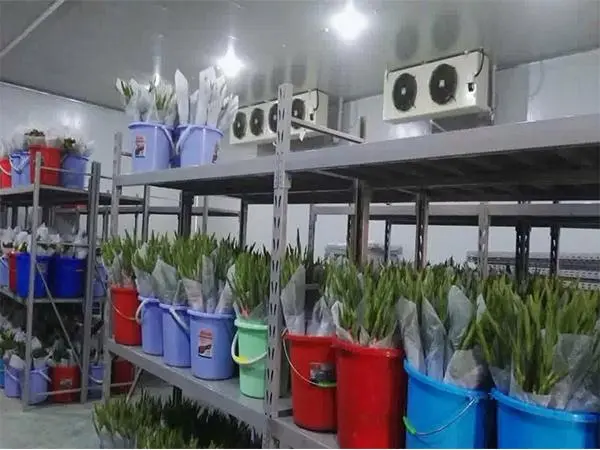
5.Why does frequent door opening reduce flower quality?
Every door opening brings in warm air and disturbs room conditions. In busy operations, repeated loading and unloading can raise product temperature, increase moisture imbalance, and reduce storage stability.
Why Flower Storage Conditions Matter?
1.Lower temperature slows respiration
Cut flowers continue to respire after harvest. High temperature speeds up aging, shortens vase life, and reduces flower quality. Low and stable temperature slows respiration and helps flowers stay fresh for longer.
2.Proper humidity reduces moisture loss
Flowers lose water quickly after harvest. Low humidity makes petals, leaves, and stems dry out faster. Good humidity control helps flowers keep freshness, but too much moisture can increase mold and condensation risk.
3.Balanced airflow helps keep flowers fresh
Airflow helps keep room conditions even across the cold room. Strong direct air can dry petals and leaves, especially on delicate flowers. Balanced airflow cools the load more evenly and helps protect flower quality.

How to Choose the Right Flower Cold Room?
| Point | Check |
|---|---|
| Storage volume | Count your daily boxes, buckets, or pallets. |
| Flower mix | Check whether you store one flower type or mixed products. |
| Local climate | Review temperature, humidity, power supply, and door opening frequency. |
| Humidity and airflow | Check humidity control and air distribution. |
| Insulation and layout | Review panels, doors, aisles, racks, and loading pattern. |
| Support and spare parts | Ask about guidance, documents, spare parts, and after-sales support. |
How to Keep Flowers Fresh in Cold Room?
1. Pre-cool flowers early
Remove field heat or transport heat as early as possible. Do not move warm flowers straight into long-term storage and expect good results.
2. Hydrate flowers correctly
Many flowers need proper water uptake before storage or during handling. Weak hydration shortens vase life, even when room temperature stays correct.
3. Use clean packaging and containers
Use clean buckets, sleeves, boxes, and racks. Good packaging protects the flowers and still leaves enough space for airflow.
4. Control Airflow Around the Flowers
Let air move around the load without blowing directly onto petals, leaves or flower heads. Strong direct airflow can increase moisture loss and create uneven product conditions.
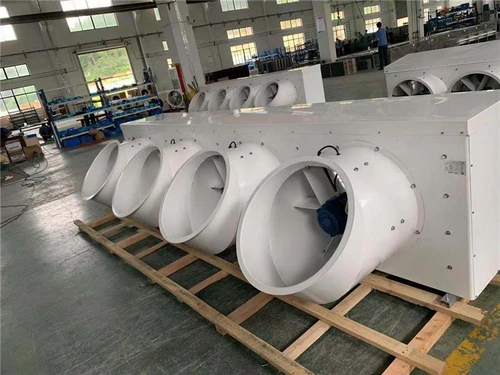
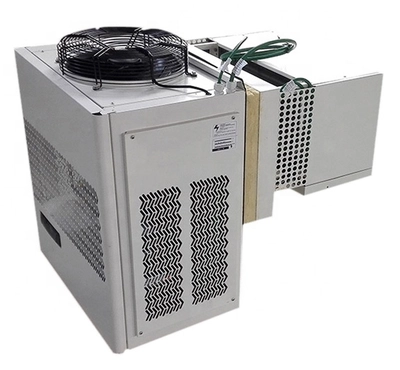
The evaporator must remove the room load without exposing flowers to damaging air velocity or excessive dehydration. Check the coil selection, temperature difference, fan duty, air throw, shelf layout and defrost method together. High relative humidity at one sensor does not prove that flowers in every rack avoid direct airflow or moisture loss.
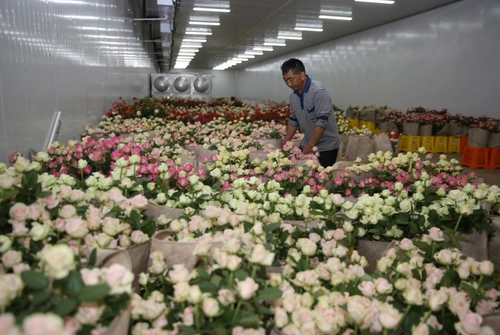
5. Monitor temperature and humidity every day
Use reliable controls and check room performance regularly. A correct setpoint means little if the real room condition keeps changing.
6. Don’t Store Flowers with High-Ethylene Products
Don’t store flowers with high-ethylene products in the same cold room. Ripe bananas, apples, pears, avocados, tomatoes, melons, and other ripening produce can speed up flower aging and reduce vase life.
This problem often appears in mixed-use cold rooms, especially in florist shops, wholesale markets, and temporary storage areas. Old flowers, damaged stems, yellow leaves, and plant waste can also raise ethylene risk inside the room.
To protect flower quality, keep flowers away from ripening fruit, damaged produce, and plant waste. If one business handles both flowers and produce, it should use separate cold rooms or clearly separated storage zones.
7. Clean the room on schedule
Clean floors, drains, racks, doors, and contact surfaces regularly. Remove standing water, damaged flowers, and dirty packaging fast.
Common Failure Cases
FAQs
Q1. Should I design for 1-3 days or 5-14 days?
For 1-3 days, focus on stable temperature and easy access. For 5-14 days, add tighter control of humidity, airflow, and hygiene.
Q2. Can the evaporator dry out flowers?
Yes. Do not let cold air blow directly onto flowers. Use even airflow across the room.
Q3. How can I reduce condensation in a high-humidity room?
Control airflow, drainage, and surface temperature carefully. Keep the room clean and avoid moisture buildup.
Q4. Can I store flowers with fruit or vegetables?
As a default, separate ethylene-sensitive flowers from ripening fruit and other ethylene sources.
Mixed storage requires confirmed commodity compatibility, a suitable temperature range, controlled ethylene exposure and an operating plan. Do not rely on room temperature alone to manage ethylene risk.
Q5. Are glass display doors good for high-traffic use?
Not usually. They work better for display than for frequent opening and heavy loading.
Q6. Which defrost method works better for a flower cold room?
Choose a defrost method that keeps room conditions stable. Poor defrost control can cause larger temperature swings.
Q7. Will the system stay reliable in very hot, humid areas with unstable power?
It can max stand +45°C ambient temp, but the design must match local conditions. Backup power or dual-unit planning can improve reliability.
Q8. Can I expand the cold room later?
Yes, if you plan for expansion early. Leave room for future storage, power load, and equipment upgrades.
Conclusion
A flower cold room does more than lower temperature. It helps protect flower quality through the right balance of temperature, humidity, airflow, and handling. If you match the cold room design to your flower types, storage volume, and local conditions, you can keep flowers fresher, reduce waste, and run storage more efficiently.