
Thiết bị ngưng tụ phòng lạnh đóng vai trò quan trọng trong hiệu suất kho lạnh.
Nó giúp giữ nhiệt độ thích hợp cho các sản phẩm như rau củ, hoa quả, Hải sản, kem, và thuốc. Nếu bạn chọn sai đơn vị, phòng lạnh có thể nguội dần, tiêu thụ nhiều điện năng hơn, hoặc phải đối mặt với những vấn đề thường xuyên.
Hướng dẫn này dành cho ai
Hướng dẫn này phù hợp phòng lạnh người bán buôn, người cài đặt, nhà thầu dự án, và các doanh nghiệp cần hệ thống lạnh riêng.
Nó giải thích thế nào là một căn phòng lạnh lẽo Đơn vị ngưng tụ là, các thành phần chính của nó hoạt động như thế nào, cách cài đặt và vận hành nó.
Nó cũng giúp người đọc hiểu được các điểm vận hành chính và xu hướng thị trường thay thế chất làm lạnh, để họ có thể đưa ra quyết định mua hàng và kỹ thuật tốt hơn.
Tiêu chí lựa chọn thiết bị ngưng tụ
Khi bạn chọn một thiết bị ngưng tụ, đừng chỉ nhìn vào KÍCH THƯỚC PHÒNG LẠNH. Kích thước phòng chỉ là điểm khởi đầu.
Bạn cũng cần suy nghĩ về nhiệt độ phòng mục tiêu của mình, chất lượng cách nhiệt, tần số mở cửa, và tần suất sản phẩm ra vào.
Nếu bạn chọn đơn vị chỉ theo thể tích phòng, quá trình này có thể trông dễ dàng lúc đầu. Nhưng vào mùa hè, ở những vùng nóng, hoặc trong các dự án sử dụng nhiều, bạn có thể phải đối mặt với việc làm mát chậm, hóa đơn tiền điện cao hơn, hoặc vận hành máy nén nặng nhiều giờ.
1. Bạn nên kiểm tra điều gì trước tiên?
Tập trung vào những điều này 3 yếu tố then chốt:
- Kích thước phòng lạnh: Nó cho thấy khả năng làm mát sơ bộ mà bạn cần.
- Hiệu suất cách nhiệt: Cách nhiệt kém gây mất mát nhanh hơn, vì vậy bạn cần một đơn vị lớn hơn.
- Nhiệt độ mục tiêu: Nhiệt độ càng thấp, đơn vị càng cần phải làm việc chăm chỉ hơn.
Từ đơn giản: Một căn phòng lớn hơn, cách nhiệt kém hơn, hoặc nhiệt độ mục tiêu thấp hơn thường cần một thiết bị ngưng tụ lớn hơn.
2. Tại sao bạn không thể chọn chỉ theo kích thước phòng?
Bởi vì hai phòng lạnh có cùng kích thước có thể cần các đơn vị rất khác nhau!
Ví dụ, một 100 m³ phòng lạnh có thể chứa đồ uống, mở cửa ít hơn, và sử dụng cách nhiệt tốt.
Khác 100 phòng m³ có thể bảo quản thịt đông lạnh, mở cửa nhiều lần trong ngày, và nhận được những sản phẩm ấm áp hơn.
Ngay cả khi kích thước phòng vẫn giữ nguyên, cái thứ 2 cần nhiều khả năng làm mát hơn và thường cần một bộ lớn hơn.
3. Làm thế nào để bạn chọn phạm vi mã lực khác nhau?
- 1-3HP: Tốt cho phòng lạnh nhỏ, phòng lạnh nhà bếp nhỏ, đồ uống, hoặc bảo quản hoa.
- 3–8HP: Tốt cho phòng lạnh vừa, giao đồ ăn, và các dự án chế biến thực phẩm nhỏ.
- Trên 8HP: Tốt cho phòng đông vừa và lớn, bảo quản thịt, hải sản, hoặc các dự án có doanh thu cao.
Ghi chú: HP chỉ mang tính chất tham khảo. Bạn vẫn cần kiểm tra xem thiết bị có thể xử lý được phòng lạnh của bạn trong điều kiện làm việc thực tế hay không.
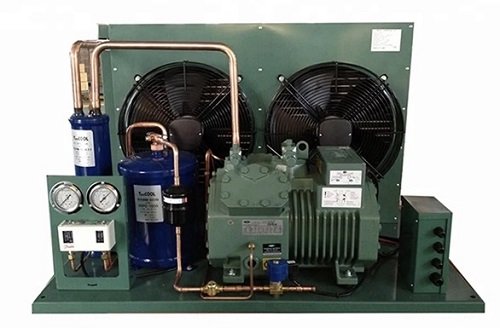
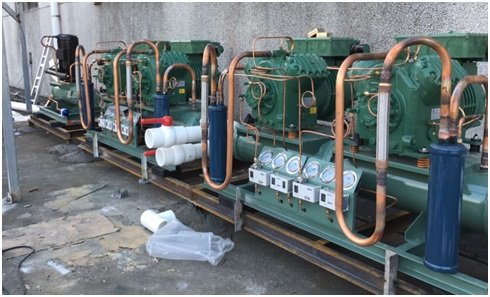
Đơn vị ngưng tụ bán kín
Hiệu quả năng lượng và COP
Nhiều người mua nhìn vào giá đầu tiên và mã lực thứ hai, nhưng hiệu quả sử dụng năng lượng ảnh hưởng trực tiếp đến chi phí dài hạn hơn.
Nếu hai thiết bị có thể cung cấp kết quả làm mát như nhau, cái hiệu quả hơn thường tiết kiệm điện hơn theo thời gian.
1. COP là gì?
Bạn có thể hiểu COP một cách đơn giản:
Nó cho thấy thiết bị có thể tạo ra bao nhiêu khả năng làm mát từ một đơn vị điện.
COP càng cao, thiết bị có thể tiết kiệm được nhiều năng lượng hơn.
- COP cao hơn có nghĩa là hiệu quả năng lượng tốt hơn.
- COP >3.0 thường cho thấy hiệu suất tiết kiệm năng lượng tốt.
Khi bạn so sánh các đơn vị, đừng chỉ hỏi về HP. Hỏi về COP nữa.
2. EER là gì?
EER tương tự như COP. Nó cũng cho thấy hiệu quả năng lượng.
Ghi chú: EER cao hơn thường có nghĩa là thiết bị có thể tiết kiệm điện hơn. EER = COP × 3.412
3. Tại sao nhiều người mua quan tâm đến máy nén biến tần?
Máy nén biến tần không chạy ở tốc độ tối đa mọi lúc. Khi tải làm mát giảm xuống, nó có thể tự động điều chỉnh TẦN SỐ MÁY NÉN. Điều này thường giúp thiết bị tiết kiệm năng lượng hơn và chạy êm hơn so với thiết bị không có biến tần..
4. Người mua nên kiểm tra những điểm tiết kiệm năng lượng nào khác?
-
Hiệu suất môi trường xung quanh cao: Kiểm tra xem thiết bị có bị mất hiệu suất quá nhiều vào mùa hè hoặc vùng khí hậu nhiệt đới không.
-
Công suất làm mát thực tế trong điều kiện thực tế: Kiểm tra xem đơn vị có thể xử lý dự án thực tế của bạn không, không chỉ là dữ liệu đánh giá trên giấy.
Chức năng của các bộ phận của dàn ngưng tụ
Máy nén
Nó đóng vai trò nén và dẫn động môi chất lạnh trong mạch môi chất lạnh. Máy nén hút chất làm lạnh từ vùng áp suất thấp và nén nó, sau đó đưa đến khu vực áp suất cao để làm mát và ngưng tụ.
Nó tỏa nhiệt vào không khí thông qua các cánh tản nhiệt làm mát không khí, trong khi đó, chất làm lạnh cũng thay đổi từ trạng thái khí sang lỏng, và cuối cùng áp lực tăng lên.
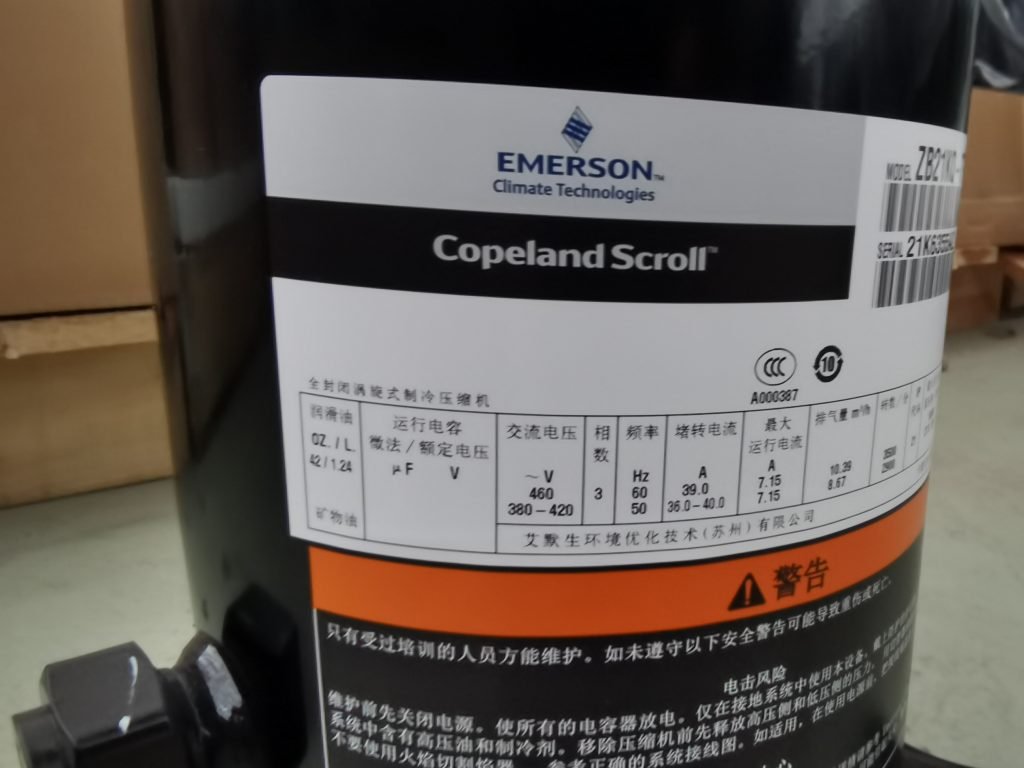
Máy nén
Tụ điện
Là một trong những thiết bị trao đổi nhiệt chính trong hệ thống lạnh kho lạnh, dùng để giải nhiệt cho hơi môi chất lạnh có nhiệt độ cao thải ra từ máy nén của kho lạnh, hoặc ngưng tụ nó thành chất lỏng áp suất cao.

Tụ điện
Van điện từ
1. Ngăn chặn chất lỏng làm lạnh áp suất cao đi vào thiết bị bay hơi khi tắt máy nén, tránh để áp suất thấp quá cao khi máy nén chạy lần sau, đồng thời ngăn chặn máy nén bị chất lỏng tấn công.
2. Khi nhiệt độ kho lạnh đạt giá trị cài đặt, bộ điều nhiệt bắt đầu hoạt động, trong khi van điện từ mất điện, và máy nén dừng khi áp suất thấp đạt đến giá trị cài đặt tắt máy.
Khi nhiệt độ ở phòng lạnh tăng trở lại giá trị cài đặt, bộ điều nhiệt hoạt động, và van điện từ cũng hoạt động. Máy nén khởi động khi áp suất thấp tăng đến giá trị cài đặt của máy nén.
Van điện từ
Bộ bảo vệ điện áp cao và thấp
Ngăn áp suất cao quá cao và áp suất thấp quá thấp, để bảo vệ máy nén.
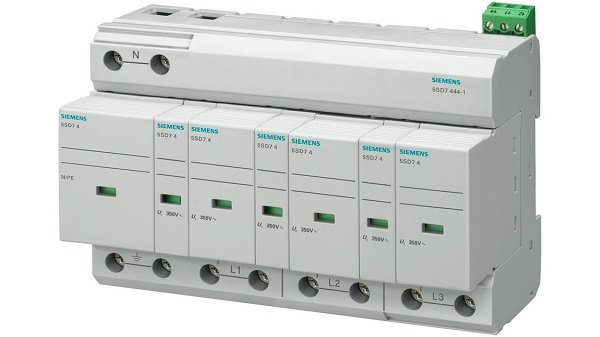
Bộ bảo vệ điện áp cao và thấp
máy điều nhiệt
Tương đương với bộ não của kho lạnh, điều khiển việc mở và dừng làm lạnh, rã đông, và việc mở và dừng của người hâm mộ.
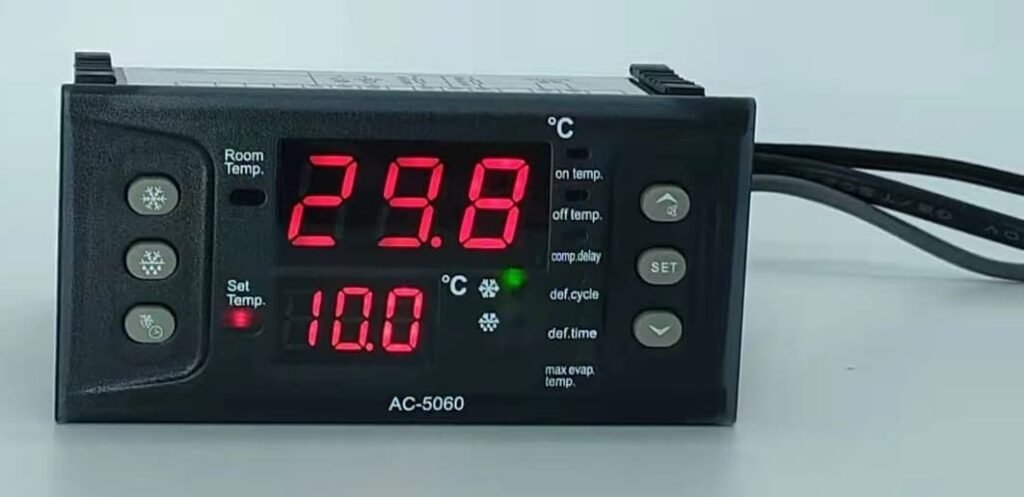
máy điều nhiệt
Lọc khô hơn
Lọc tạp chất và độ ẩm trong hệ thống.

Lọc khô hơn
Bảo vệ áp suất dầu
Đảm bảo máy nén có đủ dầu bôi trơn.
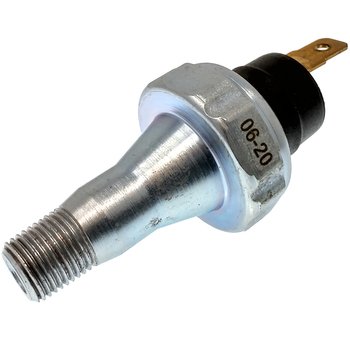
Bảo vệ áp suất dầu
Van giãn nở nhiệt
Còn được gọi là “van tiết lưu”, có thể làm cho áp suất cao và thấp của hệ thống tạo thành chênh lệch áp suất rất lớn, để chất lỏng làm lạnh áp suất cao ở đầu ra của van giãn nở nhanh chóng giãn nở và bay hơi, hấp thụ nhiệt trong không khí qua thành ống, và trao đổi lạnh và nóng.
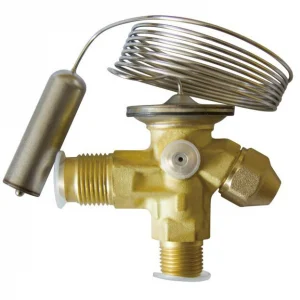
Van giãn nở nhiệt (TXV)
Cách thức hoạt động của TXV
Để ý: Nếu bạn muốn biết thêm kiến thức về TXV, vui lòng kiểm tra bài viết của chúng tôi “Chức năng và gỡ lỗi của van giãn nở nhiệt“.
Tách dầu
Tách dầu bôi trơn trong hơi nước áp suất cao (thải ra từ máy nén lạnh) để đảm bảo thiết bị hoạt động an toàn và hiệu quả.
Theo nguyên lý tách dầu bằng cách giảm tốc độ luồng khí và thay đổi hướng luồng khí, các hạt dầu trong hơi nước áp suất cao được tách ra dưới tác động của trọng lực.
Nói chung là, khi vận tốc không khí dưới 1m/s, có thể tách các hạt dầu >0.2đường kính mm (chứa trong hơi nước).

Tách dầu
Van điều chỉnh áp suất bay hơi
Ngăn chặn áp suất bay hơi (và nhiệt độ bay hơi) từ giảm xuống dưới giá trị được chỉ định. Đôi khi điều chỉnh áp suất thiết bị bay hơi để thích ứng với sự thay đổi tải.
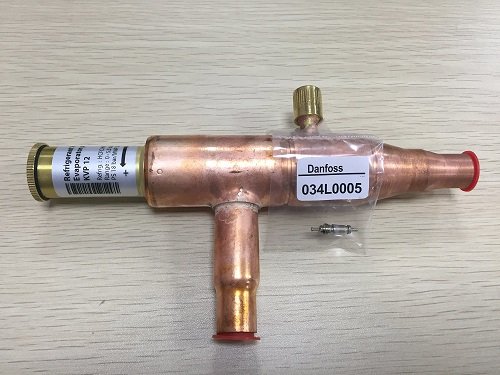
Van điều chỉnh áp suất bay hơi
Thống đốc quạt
Chủ yếu được sử dụng để điều chỉnh tốc độ của động cơ quạt ngưng tụ làm mát bằng không khí ngoài trời, hoặc thiết bị bay hơi phòng lạnh.
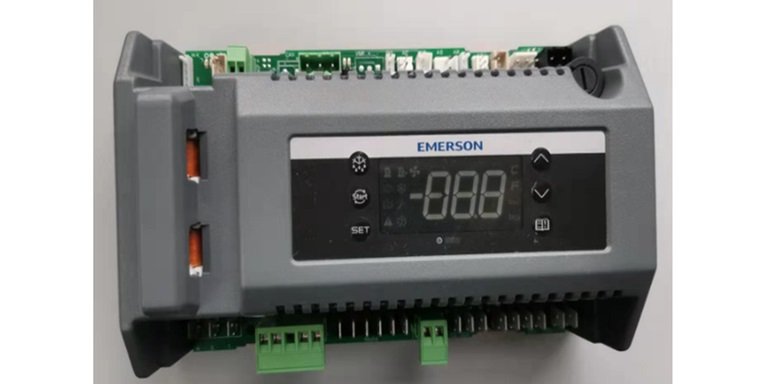
Thống đốc quạt
Máy tách khí-lỏng
Để tách chất làm lạnh ở trạng thái hỗn hợp hơi-lỏng (trở lại bởi thiết bị bay hơi), do đó ngăn chặn sự tấn công của chất lỏng máy nén.

Máy tách khí-lỏng
kính ngắm
Để quan sát dòng chảy của chất làm lạnh. Khi chất làm lạnh ở một lượng thích hợp, chỉ chất lỏng sẽ chảy mà không tạo ra bong bóng trắng; nếu hệ thống khô, lõi thị giác có màu xanh lá cây, nếu không nó có thể trở thành màu vàng hoặc các màu khác.
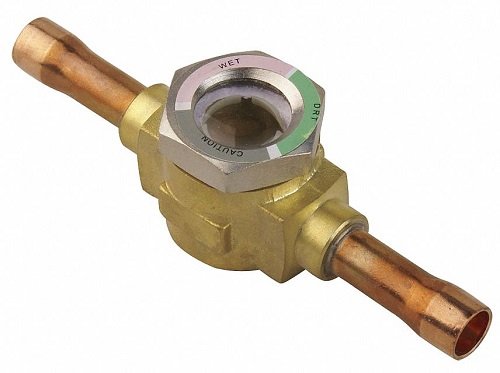
kính ngắm
Cài đặt và vận hành thiết bị phòng lạnh
Mẹo lắp đặt thiết bị làm mát
1. Tìm vị trí lắp đặt tốt nhất
1st, bạn nên cân nhắc vị trí tốt nhất để lưu thông không khí để lắp đặt bộ làm mát Thiết bị (còn được gọi là thiết bị bay hơi), 2thứ, xem xét hướng của cấu trúc phòng lạnh.
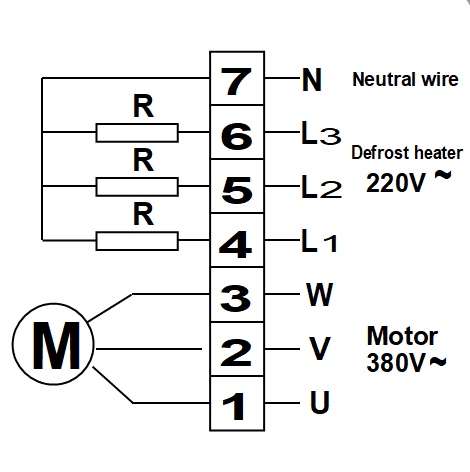
Sơ đồ mạch làm mát đơn vị
Khoảng cách giữa bộ làm mát thiết bị và phòng lạnh bên trong tường phải lớn hơn độ dày của thiết bị bay hơi.
2. Thắt chặt tất cả các cáp treo
Thắt chặt tất cả các dây treo thiết bị bay hơi khi lắp đặt, trong khi đó đục lỗ và niêm phong các bu lông & cáp treo có chất bịt kín để tránh rò rỉ không khí.
Khi thiết bị bay hơi quá nặng, bạn nên sử dụng Không. 4 hoặc 5 sắt góc như chùm tia, và nhớ kéo dài thanh ngang sang tấm trên cùng và tấm tường khác để giảm khả năng chịu tải.
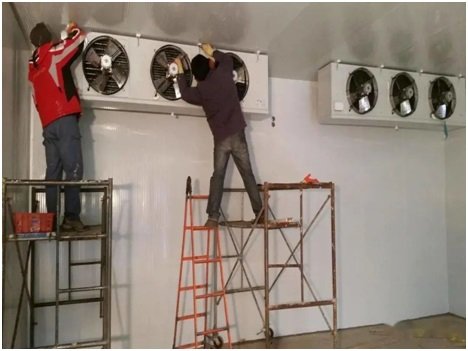
Lắp đặt bộ làm mát
3. hướng lắp đặt
Để biết thêm thông tin về hướng lắp đặt dàn lạnh, Vui lòng kiểm tra “Đơn vị làm mát” trang kiến thức.
Mẹo lắp đặt thiết bị ngưng tụ phòng lạnh
1. Trang bị bộ tách dầu
Cả máy nén bán kín và máy nén kín đều phải trang bị bộ tách dầu, và đổ một lượng dầu thích hợp.
Khi nhiệt độ bay hơi thấp hơn -15°C, bạn nên lắp đặt bộ tách khí-lỏng với lượng dầu làm lạnh thích hợp.
2. Lắp đệm cao su vào đế máy nén
Nên lắp đệm cao su giảm xóc vào đế máy nén, nhớ để dành không gian bảo trì khi cài đặt Đơn vị ngưng tụ, thuận tiện để quan sát dụng cụ và điều chỉnh van.
3. Chọn đúng đường kính ống đồng
Tùy thuộc vào kích thước các mặt tiếp xúc van hút và xả của máy nén để lựa chọn đường kính ống đồng.
Bạn nên tăng đường kính ống khi khoảng cách giữa bình ngưng và máy nén vượt quá 3 mét. Còn gì nữa, giữ >400mm khoảng cách giữa mặt hút của dàn ngưng tụ và tường, và giữ ít nhất 3 mét giữa cửa thoát khí và chướng ngại vật.
4. Thực hiện theo bảng tên
Đường kính ống của bể chứa chất lỏng dựa trên đường kính ống xả và ống xả chất lỏng được chỉ định trên bảng tên.
Đường ống hút của máy nén và đường ống hồi của thiết bị bay hơi không được nhỏ hơn kích thước ghi trên bảng tên, để giảm điện trở trong của đường ống bay hơi.
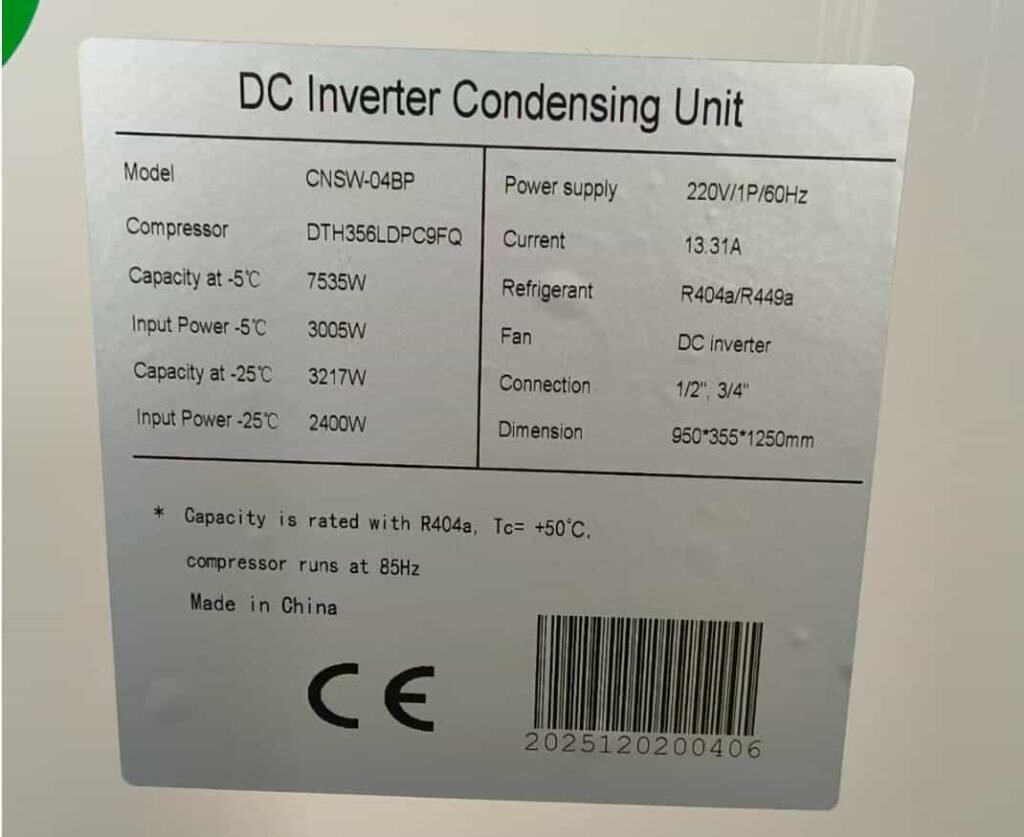
Bảng tên bộ ngưng tụ biến tần
5. Ống cần độ nghiêng
Ống xả và ống hồi phải có độ nghiêng nhất định.
Khi vị trí dàn ngưng cao hơn máy nén, ống xả phải nghiêng về phía dàn ngưng và lắp vòng chất lỏng ở miệng xả của máy nén, có thể ngăn khí (từ làm mát và hóa lỏng sau khi tắt máy) chảy ngược về lỗ thông hơi áp suất cao, và gây hiện tượng nén lỏng khi khởi động lại máy.
6. Cài đặt uốn cong hình chữ U
Bạn nên cài đặt một uốn cong hình chữ U ở đầu ra của thiết bị bay hơi của đường ống hồi khí, và đường hồi khí phải nghiêng về phía máy nén để đảm bảo hồi dầu trơn tru.
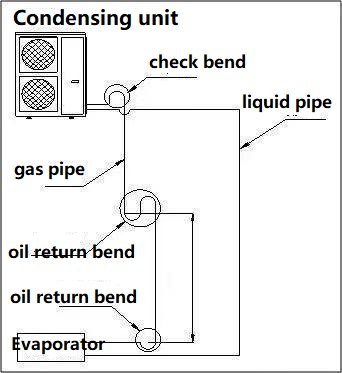
Để ý:
- Nên lắp đặt van tiết lưu càng gần thiết bị bay hơi càng tốt!
- Lắp đặt van điện từ theo chiều ngang, thân van theo chiều dọc, đồng thời chú ý đến hướng xả chất lỏng.
- Vặn chặt cảm biến nhiệt độ của van giãn nở bằng khóa kim loại ở khoảng cách 100~200mm từ đầu ra của thiết bị bay hơi, và bọc nó bằng lớp cách nhiệt hai lớp.
Vận hành hệ thống làm lạnh và làm lạnh
Một số lời khuyên như sau:
1. Đo nguồn điện
Đo điện trở của máy nén và cách điện của động cơ.
2. Đổ đầy chất làm lạnh
Sau chân không, đổ đầy chất làm lạnh vào bể chứa chất lỏng 70-80% của thể tích làm đầy tiêu chuẩn và sau đó chạy máy nén ở áp suất thấp để nạp chất làm lạnh vào thể tích tiêu chuẩn, cuối cùng đặt nhiệt độ và trạng thái mở của van giãn nở theo tình trạng đóng băng và bảo quản lạnh.
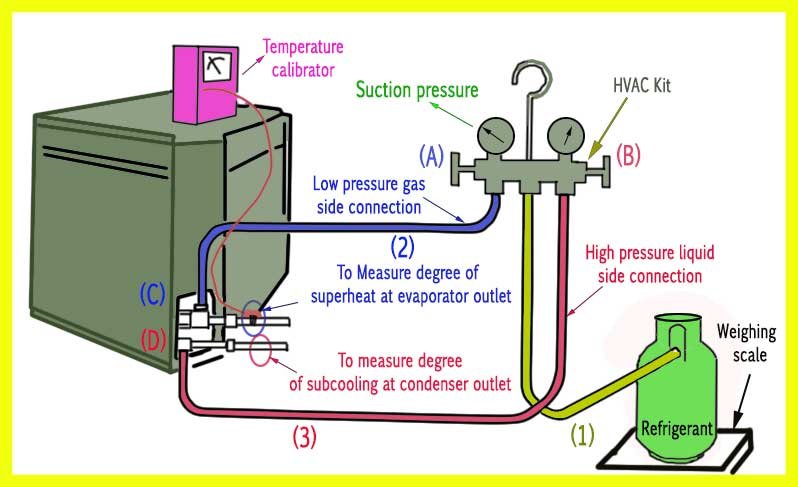
Đổ chất làm lạnh vào hệ thống làm mát
3. Chú ý đến âm thanh bất thường
Sau khi khởi động máy, trước tiên hãy lắng nghe xem âm thanh của máy nén có bình thường không, kiểm tra bình ngưng và dàn bay hơi có chạy bình thường không và dòng máy nén có ổn định không.
Sau khi làm mát ổn định, kiểm tra hoạt động của hệ thống lạnh tất cả các bộ phận: áp suất xả, Áp suất hút khí, nhiệt độ khí thải, nhiệt độ hút, nhiệt độ động cơ, nhiệt độ cacte, nhiệt độ van giãn nở, quan sát sự đóng băng của thiết bị bay hơi & van mở rộng, và quan sát mức dầu và nếu thiết bị’ âm thanh bất thường.
4. Vệ sinh hệ thống lạnh
Bên trong hệ thống lạnh phải thật sạch sẽ, nếu không nó sẽ làm tắc các lỗ bướm ga và đường dẫn dầu bôi trơn.
- Đối với hệ thống amoniac: Thường sử dụng máy nén lạnh để tăng cường hệ thống không khí, và xả nhanh không khí ở mức thấp nhất của mỗi bình chứa chính (chẳng hạn như bình ngưng, thiết bị bay hơi, bể chứa chất lỏng), để rác thải ra khỏi hệ thống.
- Đối với hệ thống lạnh freon: Thường sử dụng nitơ để xả đáy, để ngăn hơi ẩm trong không khí xâm nhập vào hệ thống.
Để ý: Nếu bạn muốn biết thêm về vệ sinh hệ thống lạnh, vui lòng kiểm tra BÀI ĐĂNG của chúng tôi “Cách loại bỏ không khí bên trong hệ thống lạnh?”
Chạy thử chú ý
Kiểm tra hệ thống theo thứ tự này: điều kiện bên ngoài, hệ thống điện, máy nén, hệ thống lạnh, và các thiết bị bảo vệ an toàn.
Để giúp người cài đặt trong quá trình vận hành tại chỗ, sử dụng danh sách kiểm tra chạy thử thiết bị ngưng tụ trong phòng lạnh sau đây để kiểm tra từng mục một.
| Kiểm tra mục | Những gì cần kiểm tra | Tiêu chuẩn / Yêu cầu | Rủi ro |
|---|---|---|---|
| Trạng thái van | Kiểm tra xem tất cả các van có ở đúng vị trí mở không, đặc biệt là van ngắt xả. | Mở tất cả các van đúng cách trước khi chạy thử. Không đóng van ngắt xả. | Van xả đóng có thể gây ra áp suất đầu cao và có thể làm hỏng máy nén. |
| Điều kiện vận hành bình ngưng | Đối với hệ thống làm mát bằng nước, kiểm tra xem van nước làm mát có mở không. Đối với hệ thống làm mát bằng không khí, kiểm tra xem quạt có chạy không và hướng gió có đúng không. | Lưu lượng nước làm mát hoặc lượng không khí phải đáp ứng yêu cầu của thiết bị. | Khả năng thải nhiệt kém có thể làm tăng áp suất ngưng tụ và giảm hiệu suất làm mát. |
| Điều khiển điện | Kiểm tra riêng mạch điều khiển điện. Kiểm tra xem điện áp nguồn có bình thường không. | Mạch điều khiển phải hoạt động tốt. Điện áp phải ổn định và phù hợp với yêu cầu của thiết bị. | Sự cố về điện áp hoặc lỗi điều khiển có thể ngăn cản việc khởi động hoặc kích hoạt bảo vệ sai. |
| Mức dầu máy nén | Kiểm tra mức dầu trong cacte máy nén. | Giữ mức dầu gần đường trung tâm của kính quan sát. | Mức dầu thấp có thể gây ra tình trạng bôi trơn kém và rút ngắn tuổi thọ máy nén. |
| Đồng hồ đo áp suất cao và thấp | Kiểm tra xem số đọc áp suất phía cao và phía thấp có nằm trong phạm vi hoạt động bình thường không. | Chỉ số áp suất phải phù hợp với điều kiện vận hành bình thường của thiết bị. | Áp suất bất thường có thể cho thấy sự tắc nghẽn, phí môi chất lạnh thấp, nạp tiền quá mức, hoặc tản nhiệt kém. |
| Áp suất dầu | Kiểm tra xem chỉ số áp suất dầu có bình thường không. | Đối với máy nén có điều khiển công suất, áp suất dầu phải cao hơn áp suất hút 0,15–0,3 MPa. Đối với máy nén không có bộ điều khiển công suất, áp suất dầu phải cao hơn áp suất hút 0,05–0,15 MPa. | Áp suất dầu thấp có thể gây ra lỗi bôi trơn và tăng nguy cơ hỏng máy nén. |
| Hoạt động của van giãn nở | Lắng nghe dòng chất làm lạnh qua van tiết lưu và kiểm tra tình trạng đường ống. | Bạn sẽ nghe thấy dòng chảy bình thường. Trong hệ thống phòng lạnh, dòng sẽ hiển thị sương giá bình thường. | Không có âm thanh chảy hoặc hiện tượng đóng băng bất thường có thể là dấu hiệu tắc nghẽn, cung cấp chất lỏng kém, hoặc hỏng van. |
| Máy nén điều khiển công suất | Đối với máy nén có thiết bị dỡ tải, kiểm tra xem máy nén có khởi động ở mức đầy tải không. | Máy nén phải chạy hết tải trong lần khởi động đầu tiên. Kiểm tra nhiệt độ đầu xi lanh để xác nhận hoạt động. | Nếu một số xi lanh không hoạt động, công suất làm mát có thể giảm. |
| Nhiệt độ đầu xi lanh | Chạm vào từng đầu xi lanh và so sánh nhiệt độ. | Đầu xi lanh nóng hơn thường có nghĩa là xi lanh hoạt động bình thường. Đầu xi lanh mát hơn có thể nghĩa là xi lanh không hoạt động. | Xi lanh không hoạt động có thể khiến công suất ra thấp hoặc hoạt động không ổn định. |
| Thiết bị bảo vệ an toàn | Kiểm tra rơle áp suất cao và thấp, rơle chênh lệch áp suất dầu, rơle ngắt nước làm mát, thiết bị bảo vệ đóng băng, van an toàn, và các thiết bị bảo vệ khác từng cái một. | Tất cả các thiết bị bảo vệ phải hoạt động bình thường và sử dụng các cài đặt phù hợp. | Lỗi bảo vệ có thể làm tăng nguy cơ tai nạn hệ thống. |
| Bài đọc nhạc cụ | Kiểm tra xem các chỉ số của thiết bị khác có nằm trong phạm vi được chỉ định hay không. | Tất cả các bài đọc phải ổn định mà không có biến động rõ ràng. | Số đọc bất thường có thể chỉ ra các vấn đề hệ thống ẩn. |
| Xử lý tình trạng bất thường | Chú ý tiếng ồn bất thường, áp lực , nhiệt độ, hoặc các điều kiện bất thường khác trong quá trình chạy thử. | Dừng thiết bị trước, rồi tìm ra nguyên nhân. | Tiếp tục hoạt động có thể làm cho vấn đề tồi tệ hơn. |
| Kiểm tra lỗi thông thường | Tập trung vào các lỗi thường gặp như tắc van giãn nở và tắc máy sấy bộ lọc. | Nếu hệ thống chạy không ổn định, trước tiên hãy kiểm tra những điểm lỗi phổ biến này. | Sự tắc nghẽn có thể gây ra tình trạng cung cấp chất lỏng kém, áp lực bất thường, và làm mát yếu. |
| Độ sạch và khô của hệ thống | Đảm bảo hệ thống bên trong luôn sạch sẽ và khô ráo, không có bụi bẩn hoặc hơi ẩm. | Giữ hệ thống sạch sẽ và khô ráo trước khi lắp đặt và vận hành. | Bụi bẩn và độ ẩm có thể gây tắc nghẽn băng, tắc nghẽn bụi bẩn, và bôi trơn kém. |
Để ý: Nếu bạn thấy áp suất cao bất thường, áp suất dầu thấp, tiếng ồn bất thường, hoặc những chuyến đi an toàn thường xuyên, dừng thiết bị ngay lập tức và kiểm tra hệ thống. Đừng ép nó tiếp tục chạy.
Các vấn đề thường gặp của đơn vị phòng lạnh
Trong quá trình vận hành thiết bị phòng lạnh, các vấn đề phổ biến có thể bao gồm báo động áp suất cao, sự cố áp suất thấp, vấn đề về áp suất dầu, lỗi khởi động máy nén, và đóng băng van mở rộng.
Để có hướng dẫn khắc phục sự cố đầy đủ, vui lòng đọc bài viết chi tiết của chúng tôi “Hướng dẫn cơ bản về danh sách lỗi và cách khắc phục sự cố của phòng lạnh”.
Xu hướng thay thế R404A
R404A vẫn phục vụ được nhiều hệ thống kho lạnh hiện có, nhưng nó không còn nổi bật như một sự lựa chọn lâu dài cho các dự án mới.
GWP cao mang lại nhiều áp lực tuân thủ hơn, rủi ro nguồn cung thắt chặt, và chi phí bảo trì ít dự đoán hơn.
Dành cho người bán buôn, người cài đặt, Nhà thầu EPC, và người dùng cuối, Việc lựa chọn chất làm lạnh hiện nay không chỉ ảnh hưởng đến thiết kế hệ thống mà còn ảnh hưởng đến chi phí vận hành và sự phù hợp với thị trường lâu dài..
Xu hướng thị trường
Ngày càng có nhiều dự án phòng lạnh giảm sự phụ thuộc vào R404A. Trong cài đặt mới, người mua ngày càng thích chất làm lạnh có GWP thấp hơn mang lại giá trị lâu dài tốt hơn.
Điều này có nghĩa là nếu ngày nay một dự án mới vẫn sử dụng R404A, việc mua trả trước có vẻ đơn giản hơn, nhưng việc nạp lại chất làm lạnh trong tương lai, dịch vụ, và chi phí tuân thủ có thể tăng lên.
Hướng thay thế chính
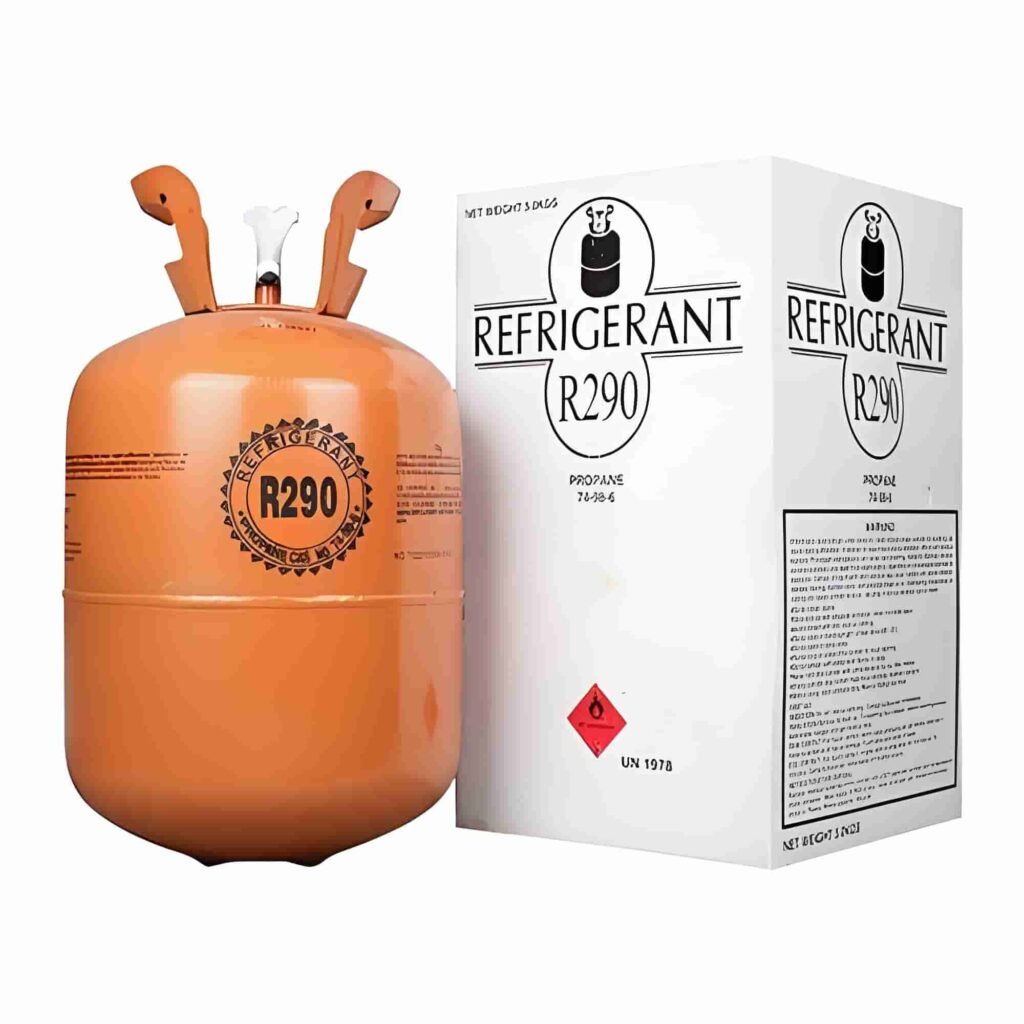
Từ xu hướng thị trường ngày nay, R290 đáng được quan tâm hơn như một lựa chọn thay thế.
So với R404A, R290 mang lại GWP cực thấp và lợi thế mạnh mẽ hơn trong việc tuân thủ môi trường và phát triển lâu dài.
Dành cho nhà cung cấp, nhà thầu muốn nâng cao khả năng cạnh tranh của sản phẩm, Giảm rủi ro chính sách trong tương lai, và củng cố giá trị dự án, R290 tiếp tục gây được sức hút.
Tuy nhiên, R290 đòi hỏi nhiều hơn một sự thay đổi chất làm lạnh đơn giản. Nó đòi hỏi tiêu chuẩn cao hơn trong thiết kế hệ thống, quy tắc an toàn, lập kế hoạch ứng dụng, và khả năng cài đặt và dịch vụ.
Vì điều đó, giải pháp thiết bị phòng lạnh R290 hoàn thiện giờ đây cho thấy sức mạnh kỹ thuật và khả năng nâng cấp của nhà sản xuất.
Tác động thương mại
Từ góc độ kinh doanh, xu hướng thay thế R404A ảnh hưởng trực tiếp đến cấu hình dự án mới, định vị sản phẩm, chiến lược hậu mãi, và khả năng cạnh tranh thị trường lâu dài.
Khi khách hàng lựa chọn phòng lạnh Đơn vị ngưng tụ, họ không còn chỉ tập trung vào đơn giá.
Họ cũng xem xét liệu chất làm lạnh có phù hợp với xu hướng thị trường trong tương lai hay không, liệu dịch vụ có thuận tiện không, và liệu dự án có thể giữ được giá trị trong những năm tới hay không.
Câu hỏi thường gặp
Q1: Làm cách nào để mua thiết bị ngưng tụ phòng lạnh từ nhà sản xuất Trung Quốc?
1. Xác nhận nhiệt độ phòng, kích cỡ phòng, chất làm lạnh, cung cấp điện, và nhiệt độ môi trường đầu tiên.
2. Nếu bạn cần dịch vụ OEM, xác nhận biểu tượng, thùng carton, tên nơi, hướng dẫn sử dụng, và ngôn ngữ điều khiển sớm.
3. Hỏi về MOQ, thời gian dẫn, phụ tùng thay thế, và hỗ trợ sau bán hàng trước khi đặt hàng.
4. Trước khi giao hàng, kiểm tra nhãn hiệu máy nén, dữ liệu bảng tên, chất làm lạnh, kích thước ống, thiết lập điện, và sơ đồ nối dây.
5. Để an toàn tốt hơn, xác nhận thông số kỹ thuật đầu tiên, tài liệu thứ hai, tiêu chuẩn kiểm tra thứ ba, và khoản thanh toán cuối cùng cuối cùng.
quý 2: Tôi nên chú ý điều gì khi chọn thiết bị ngưng tụ cho các vùng khí hậu hoặc vùng khác nhau?
1. Đối với vùng nóng, kiểm tra xem thiết bị có hỗ trợ nhiệt độ môi trường cao như 46°C hay không, 50°C, hoặc 52°C.
2. Chú ý đến kích thước tụ điện, hiệu suất của quạt, trận đấu máy nén, và các tùy chọn bộ môi trường xung quanh cao.
3. Đối với khu vực ven biển hoặc ẩm ướt, kiểm tra bảo vệ chống ăn mòn, vật liệu tủ, và niêm phong hộp điện.
4. Đối với khu vực nhiều bụi, kiểm tra thiết kế luồng không khí và làm sạch thuận tiện.
5. Một thiết bị phù hợp với khí hậu địa phương thường chạy ổn định hơn và bền hơn.
Q3: Lắp đặt dàn ngưng ngoài trời cần chú ý điều gì nhất?
Đầu tiên, kiểm tra thông gió. Sau đó kiểm tra khả năng chống nắng, che mưa, và không gian phục vụ.
Nếu không khí không thể di chuyển tốt xung quanh bình ngưng, thiết bị vẫn có thể phải đối mặt với áp suất ngưng tụ cao, hiệu suất làm mát thấp hơn, và báo động mùa hè thường xuyên ngay cả khi cấu hình đúng.
Q4: Điện áp không ổn định có ảnh hưởng gì không Đơn vị ngưng tụ hoạt động?
Đúng, và tác động có thể lớn hơn nhiều người mua mong đợi.
Biến động điện áp có thể ảnh hưởng đến việc khởi động máy nén, hành động contactor, hoạt động của quạt, và sự ổn định của hệ thống điều khiển. Trong trường hợp nghiêm trọng, nó cũng có thể gây ra những chuyến đi sai lầm về an toàn hoặc làm giảm tuổi thọ của các bộ phận điện..
Nếu nguồn điện cục bộ của bạn không ổn định, xác nhận dải điện áp và tần số của thiết bị trước khi mua.
Bạn cũng nên kiểm tra xem bạn có cần ổn định điện áp không, bảo vệ trình tự pha, bảo vệ mất pha, hoặc hệ thống điều khiển điện cấp cao hơn.
Q5: Người mua thường bỏ qua điều gì nhất khi họ kiểm tra thiết bị sau khi nó đến nơi?
Nhiều người mua chỉ kiểm tra xem bề ngoài có hư hỏng không, nhưng những chi tiết nhỏ thường gây ra vấn đề lớn hơn về sau.
Khi đơn vị đến, đừng chỉ kiểm tra vẻ bề ngoài. Đồng thời kiểm tra dữ liệu bảng tên, Thương hiệu và model máy nén, loại chất làm lạnh, kích thước kết nối đường ống, số lượng quạt, đặc điểm kỹ thuật cung cấp điện, cấu hình hộp điều khiển, và liệu lô hàng có bao gồm sơ đồ đi dây và đánh dấu dây hay không.
Phần kết luận
Dàn ngưng tụ phòng lạnh ảnh hưởng đến hiệu suất làm mát, sử dụng năng lượng, và độ tin cậy của hệ thống.
Thiết bị phù hợp có thể hỗ trợ hoạt động ổn định, chi phí vận hành thấp hơn, và ít vấn đề về dịch vụ hơn.
Nếu bạn hiểu các thành phần chính, điểm lựa chọn, cài đặt cơ bản, và những vấn đề chung, bạn có thể đưa ra quyết định tốt hơn cho dự án phòng lạnh của mình.



2 phản hồi
Văn học thật tuyệt vời, nó rất tốt để học hỏi từ nó.
Nhưng tôi đề nghị bạn có thể bao gồm sơ đồ cài đặt và sơ đồ mạch.
ĐƯỢC RỒI, cám ơn vì sự gợi ý.