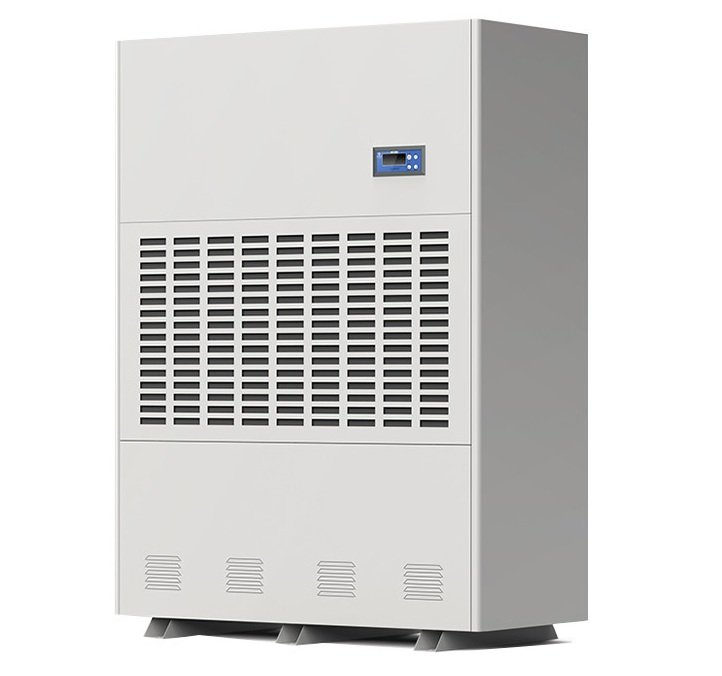
La mayoría de las fallas del deshumidificador provienen del poder., flujo de aire, drenaje, sensor, o problemas de refrigeración.
Estas cinco áreas representan muchos problemas comunes de los deshumidificadores., incluyendo sin deshumidificación, baja eficiencia, formación de hielo, fuga de agua, errores de sensores, y paradas repentinas.
En esta guía de solución de problemas, te explicamos las averías más comunes, causas probables, y soluciones paso a paso para deshumidificadores comerciales e industriales.
Tabla de solución rápida de problemas
Aviso de seguridad: Aislar la fuente de alimentación antes de retirar cualquier panel.. Pruebas electricas, reemplazo del capacitor, diagnóstico del compresor, carga de refrigerante, y la reparación del sistema sellado debe ser realizada por personal calificado. Nunca pase por alto un interruptor de presión, protector de sobrecarga, interruptor de flotador, u otro dispositivo de seguridad.
Solucione siempre problemas desde simples condiciones externas hasta componentes internos.. Esta secuencia ayuda a los equipos de mantenimiento a identificar la causa raíz., reducir el tiempo de inactividad, y evitar reemplazar piezas funcionales.
| Paso | Acción | Punto clave |
|---|---|---|
| 1 | Aislar la fuente de alimentación | Garantizar una inspección segura. |
| 2 | comprobar alarmas | Identifique primero la dirección de la falla. |
| 3 | Inspección visual | buscar suelto, sucio, obstruido, o piezas dañadas. |
| 4 | Escuche durante la operación | Identificar fan, relé, o anomalías del compresor. |
| 5 | Medir valores clave | Confirmar voltaje, actual, sensor, y estado del condensador. |
| 6 | Abra la unidad si es necesario | Desmontar sólo después de comprobaciones básicas.. |
| 7 | Reparar y volver a probar | Verificar el funcionamiento normal después de la corrección.. |
Lista de fallas y solución de problemas
El siguiente paso explicaremos específicamente la lista de fallas y los detalles de solución de problemas..
| Fallos | Razón | Solución de problemas |
|---|---|---|
| El deshumidificador no enciende | 1. Fuente de alimentación desconectada | 1. Asegúrese de que la fuente de alimentación esté enchufada de forma segura. |
| 2. Disyuntor disparado o fusible quemado | 2. Verifique y reinicie el disyuntor o reemplace el fusible. | |
| 3. Toma de corriente defectuosa | 3. Pruebe el tomacorriente con otro dispositivo para asegurarse de que funcione. | |
| 4. Fallo de componente interno | 4. Contacta con un técnico profesional. | |
| 5. Tanque de agua lleno | 5. Vacíe el tanque de agua y asegúrese de que esté colocado correctamente.. | |
| El deshumidificador no recoge agua. | 1. Humedad ambiente baja | 1. Verifique que la humedad de la habitación esté por encima del nivel operativo del deshumidificador. |
| 2. Filtro de aire sucio u obstruido | 2. Limpiar o reemplazar el filtro de aire.. | |
| 3. Entrada o escape de aire bloqueado | 3. Asegúrese de que no haya obstrucciones en la entrada y salida de aire.. | |
| 4. Compresor defectuoso o fuga de refrigerante | 4. Contacta con un técnico profesional. | |
| 5. Ajustes de humedad incorrectos | 5. Ajuste la configuración a un nivel de humedad más bajo. | |
| El deshumidificador hace ruido | 1. Piezas sueltas o desgastadas | 1. Apriete los tornillos e inspeccione si hay piezas desgastadas., o reemplazarlo. |
| 2. Obstrucción del ventilador | 2. Verifique y elimine cualquier obstrucción en el ventilador.. | |
| 3. Vibraciones en superficie irregular. | 3. Coloque el deshumidificador sobre una superficie nivelada.. | |
| 4. Problemas con el compresor | 4. Contacta con un técnico profesional. | |
| El deshumidificador pierde agua | 1. Tanque de agua lleno o mal colocado | 1. Vaciar y reposicionar correctamente el depósito de agua.. |
| 2. Manguera o sistema de drenaje obstruido | 2. Limpie la manguera de drenaje y asegúrese de que no esté doblada ni bloqueada.. | |
| 3. Tanque de agua dañado o agrietado | 3. Inspeccionar y reemplazar el tanque de agua.. | |
| El deshumidificador funciona continuamente | 1. Alta humedad ambiental | 1. Confirme el nivel de humedad de la habitación y ajuste la configuración. |
| 2. Ajustes de humedad incorrectos | 2. Establezca el nivel de humedad en un valor más alto. | |
| 3. Humidistato defectuoso | 3. Pruebe y reemplace el humidistato.. | |
| 4. Filtro de aire o entrada bloqueados | 4. Limpie el filtro de aire y asegure un flujo de aire adecuado.. | |
| El deshumidificador se enciende y apaga con frecuencia | 1. Ajustes de humedad incorrectos | 1. Ajuste la configuración de humedad a un nivel más apropiado. |
| 2. Filtro de aire sucio | 2. Limpiar o reemplazar el filtro de aire.. | |
| 3. Flujo de aire bloqueado | 3. Asegúrese de que la unidad tenga espacio adecuado a su alrededor para un flujo de aire adecuado.. | |
| 4. Humidistato defectuoso | 4. Pruebe y reemplace el humidistato.. | |
| 5. Problemas electricos | 5. Inspeccione si hay conexiones sueltas o cableado defectuoso y repárelo.. | |
| Acumulación de escarcha del deshumidificador en los serpentines | 1. Temperatura ambiente demasiado baja | 1. Utilice el deshumidificador en un ambiente más cálido o utilice un deshumidificador con descongelación automática. |
| 2. Control de descongelación defectuoso | 2. Verifique y reemplace el control de descongelación.. | |
| 3. Flujo de aire restringido | 3. Limpie el filtro de aire y garantice una ventilación adecuada alrededor de la unidad.. | |
| 4. Bajos niveles de refrigerante | 4. Póngase en contacto con un técnico profesional para comprobar y rellenar el refrigerante.. | |
| El deshumidificador huele a humedad o moho | 1. Filtro de aire o tanque de agua sucio | 1. Limpie o reemplace el filtro de aire y limpie periódicamente el tanque de agua.. |
| 2. Crecimiento de moho o hongos dentro de la unidad | 2. Limpie el interior de la unidad con un detergente suave y agua.. | |
| 3. La alta humedad ambiental promueve el crecimiento de moho. | 3. Asegúrese de que el deshumidificador tenga el tamaño adecuado para la habitación.. | |
| Se dispara el disyuntor del deshumidificador | 1. circuito sobrecargado | 1. Asegúrese de que el deshumidificador esté en un circuito dedicado. |
| 2. Deshumidificador defectuoso | 2. Pruebe y reemplace los componentes defectuosos o comuníquese con un técnico. | |
| 3. Cortocircuito o problema eléctrico | 3. Inspeccionar para detectar problemas de cableado y reparar. | |
| El ventilador del deshumidificador no funciona | 1. Motor del ventilador defectuoso | 1. Inspeccionar y reemplazar el motor del ventilador.. |
| 2. ventilador bloqueado | 2. Verifique y elimine cualquier obstrucción alrededor del ventilador.. | |
| 3. Problemas electricos | 3. Inspeccionar y reparar cualquier conexión eléctrica.. | |
| El deshumidificador sopla aire frío. | 1. Temperatura ambiente baja | 1. Utilice el deshumidificador en un ambiente más cálido. |
| 2. Sensor de temperatura defectuoso | 2. Pruebe y reemplace el sensor de temperatura.. | |
| El deshumidificador no responde al control remoto | 1. Baterías agotadas | 1. Reemplace las baterías. |
| 2. El control remoto no apunta correctamente | 2. Asegúrese de que el control remoto apunte directamente al sensor de la unidad. | |
| 3. Control remoto o sensor defectuoso | 3. Pruebe y reemplace el control remoto o el sensor. | |
| Sobrecalentamiento del deshumidificador | 1. Salidas de aire bloqueadas | 1. Asegúrese de que las salidas de aire estén libres de obstrucciones.. |
| 2. Filtro de aire sucio | 2. Limpiar o reemplazar el filtro de aire.. | |
| 3. Motor del ventilador defectuoso | 3. Inspeccionar y reemplazar el motor del ventilador.. | |
| 4. Temperatura ambiente demasiado alta | 4. Utilice el deshumidificador en un ambiente más fresco. | |
| La humedad permanece por encima del punto de ajuste. | 1. El deshumidificador es demasiado pequeño. | 1. Utilice un deshumidificador más grande. |
| 2. La gente abre puertas o ventanas con demasiada frecuencia.. | 2. Mantenga puertas y ventanas cerradas. | |
| 3. Entra demasiado aire húmedo en la habitación.. | 3. Reducir el aire húmedo que entra en la habitación.. | |
| 4. El sensor de humedad está en el lugar equivocado. | 4. Mueva el sensor a un lugar mejor. | |
| 5. El polvo bloquea el filtro o la bobina.. | 5. Limpiar el filtro y la bobina.. | |
| 6. La baja temperatura o humedad relativa reduce la capacidad de la unidad. | 6. Verifique la capacidad de la unidad a la temperatura y humedad relativa reales.. | |
| El código de error regresa después del reinicio | 1. El cable del sensor está suelto o dañado. | 1. Verifique el cable del sensor y el enchufe.. |
| 2. El sensor da una lectura incorrecta. | 2. Prueba, ajustar, o reemplazar el sensor. | |
| 3. Entra agua en el enchufe del sensor. | 3. Secar el tapón y evitar que entre agua.. | |
| 4. El controlador utiliza configuraciones incorrectas. | 4. Verifique la configuración en el manual.. | |
| 5. La PCB o el cable de comunicación tiene una falla.. | 5. Pídale a un técnico que revise la PCB y el cable.. | |
| 6. La falla original todavía existe.. | 6. Solucione la falla original antes de otro reinicio.. | |
| El compresor tararea pero no arranca | 1. El voltaje es demasiado bajo o inestable. | 1. Comprobar y corregir el voltaje.. |
| 2. La fuente de alimentación pierde una fase.. | 2. Comprobar todas las fases de potencia.. | |
| 3. Condensador, contactor, o el relé falla. | 3. Pruebe y reemplace la pieza defectuosa.. | |
| 4. El compresor se sobrecalienta. | 4. Deje que el compresor se enfríe y compruebe por qué se sobrecalienta.. | |
| 5. La presión del sistema es demasiado alta. | 5. revisa el ventilador, bobina, flujo de aire, y presión del sistema. | |
| 6. El compresor se bloquea o se avería. | 6. Detenga la unidad y solicite a un técnico que revise el compresor.. |
Matriz responsable de resolución de problemas
Antes de la reparación, definir claramente los límites del servicio. El mantenimiento del sitio puede manejar inspecciones básicas y problemas externos simples., mientras que las fallas que involucran el sistema de control, compresor, o circuito frigorífico debe acudir al fabricante o a técnicos cualificados..
| Asunto / condición | Usuario final o mantenimiento del sitio. | Soporte técnico del fabricante. |
|---|---|---|
| Sin poder, terminal suelto, disyuntor disparado | Sí | No |
| Filtro sucio, entrada o salida bloqueada | Sí | No |
| Bloqueo de la manguera de drenaje o pendiente de drenaje inadecuada | Sí | No |
| Limpieza de bandeja de agua y revisión básica de drenaje. | Sí | No |
| Tornillos flojos visibles o vibración anormal | Sí | No |
| Comprobación básica del cableado del sensor | Sí | No |
| Restablecimiento sencillo de parámetros según manual | Sí | No |
| Alarma repetida después del reinicio | No | Sí |
| Fallo del sensor que requiere reemplazo o calibración | No | Sí |
| Falla de la bomba de drenaje o falla del cableado interno | No | Sí |
| Fallo del motor del ventilador, falla del capacitor, falla del rele | No | Sí |
| Daños en la PCB o componentes de control quemados | No | Sí |
| Anomalía en el parámetro del programa o falla lógica del controlador | No | Sí |
| Sobrecarga del compresor o disparo repetido del protector | No | Sí |
| Fuga de refrigerante, recargar, o reparación del sistema sellado | No | Sí |
| Protección de alta/baja presión con causa desconocida | No | Sí |
| La unidad funciona pero la capacidad permanece muy por debajo de la nominal después de verificaciones básicas | No | Sí |
Programa de mantenimiento preventivo
Una buena rutina de mantenimiento no sólo previene fallas comunes, pero también ayuda a los equipos de servicio a detectar restricciones en el flujo de aire., problemas de drenaje, desviación del sensor, y problemas de refrigeración tempranos antes de que provoquen el cierre.
| Intervalo | Artículo de mantenimiento | Acción clave |
|---|---|---|
| Por mes | filtro de aire | Limpiar o reemplazar el filtro., comprobar la carga de polvo y la resistencia al flujo de aire. |
| Por mes | Entrada y salida de aire | Eliminar el bloqueo, comprobar el flujo de aire libre, inspeccionar el estado de la parrilla. |
| Por mes | Sistema de drenaje | Revisar la manguera de drenaje, bandeja de drenaje, trampa de agua, y flujo de descarga. |
| Por mes | Superficie de la unidad y gabinete | Limpiar la suciedad, inspeccionar la corrosión, comprobar el estado del panel. |
| Por mes | Estado operativo básico | Confirmar reducción de humedad, drenaje, ruido, vibración, y estado de alarma. |
| 3 Meses | Terminales electricos | Comprobar la estanqueidad de los terminales, condición del cable, y signos de sobrecalentamiento. |
| 3 Meses | Serpentín evaporador y condensador | Limpie la superficie de la bobina e inspeccione la suciedad., helada, o daños en las aletas. |
| 3 Meses | Sección de ventilador | Comprobar la rotación del ventilador, condición de la hoja, ruido del motor, y estabilidad de montaje. |
| 3 Meses | Rendimiento del sensor | Compare los valores mostrados con las condiciones reales de la habitación e inspeccione la fijación del sensor.. |
| 3 Meses | Bomba de drenaje si está equipada | Pruebe la función de arranque/parada de la bomba y confirme la descarga de agua estable. |
| 6 Meses | sistema de control | Revisar el historial de alarmas, inspeccionar el estado de la PCB, y verificar la configuración de los parámetros. |
| 6 Meses | Sujeciones y estructura. | Apretar los tornillos clave, inspeccionar el marco, apoya, y piezas antivibraciones. |
| 6 Meses | Rendimiento de refrigeración | Verifique la condición de succión/descarga, patrón de escarcha en espiral, y rendimiento de deshumidificación. |
| 6 Meses | Dispositivos de seguridad | Verificar la protección contra sobrecarga, interruptor de flotador, y otras funciones de protección. |
| 6 Meses | Revisión de repuestos | Revisar stock de filtro, sensor, condensador, relé, bomba de drenaje, y otras partes críticas. |
Información a enviar para soporte técnico
Para recibir una respuesta técnica más rápida, por favor proporcione:
1. Modelo y número de serie del deshumidificador.
2. Una foto clara de la placa de identificación..
3. El código exacto de alarma o error..
4. Voltaje del sitio, fase, y frecuencia.
5. Temperatura ambiente/HR actual y HR objetivo.
6. Dimensiones de la habitación y aplicación..
7. Mantenimiento reciente o piezas reemplazadas..
8. Fotos o un vídeo corto que muestre el controlador., sonido de funcionamiento, condición de escarcha, flujo de aire, y drenaje.
Con esta información, Nuestro equipo puede determinar si el problema está relacionado con el mantenimiento., instalación, falla del componente, condiciones de operación, o selección de modelo incorrecta.
Conclusión
La mayoría de las fallas del deshumidificador provienen de unos pocos sistemas centrales, pero un diagnóstico preciso depende de un proceso de resolución de problemas claro y lógico.
Revisando la unidad paso a paso y siguiendo un plan de mantenimiento preventivo., los usuarios pueden reducir el tiempo de inactividad, proteger los componentes clave, y mantener el deshumidificador funcionando de forma fiable a largo plazo.