Blumen verlieren schnell an Wert, wenn die Lagerbedingungen falsch sind. Ein professioneller Blumenkühlraum hilft Floristen, Großhändler, Importeure, und Projektkäufer halten die Blumen frisch, Abfall reduzieren, und die Produktqualität schützen.
In diesem Ratgeber, Sie erfahren die beste Lagertemperatur für Blumen, den richtigen Feuchtigkeitsbereich, häufige Speicherprobleme, und wie Sie einen Blumenkühlraum auswählen, der zu Ihrem Unternehmen passt. Außerdem erhalten Sie praktische Gestaltungstipps für verschiedene Blumenarten und Einsatzszenarien.
Was sollten Sie tun, bevor Blumen den Kühlraum betreten??
Bevor Blumen in den Kühlraum gelangen, Das Team sollte die Hitze reduzieren, Wasserhaushalt wiederherstellen, Sortiere die Blumen, Halten Sie Werkzeuge und Behälter sauber, und Qualitätsrisiken frühzeitig beseitigen. Diese Schritte tragen dazu bei, die Frische der Blumen zu schützen und die Kühllagerung effektiver zu gestalten.
| Schritt | Was zu tun | Warum ist es wichtig |
|---|---|---|
| Hitze reduzieren | Ernten Sie an der kühlen Tageszeit und stellen Sie die Blumen schnell an einen schattigen Ort. | Dieser Schritt verlangsamt den Feuchtigkeitsverlust und reduziert Hitzestress. |
| Wasser wiederherstellen | Schneiden Sie die Stängel erneut ab und befeuchten Sie die Blüten mit klarem Wasser oder einer geeigneten Lösung. | Dieser Schritt verbessert die Wasseraufnahme und trägt dazu bei, dass die Blumen frisch bleiben. |
| Blumen sortieren | Beschädigte entfernen, krank, oder schwache Stängel vor der Lagerung. | Dieser Schritt schützt den Rest der Charge und verbessert die Gesamtqualität. |
| Halten Sie alles sauber | Verwenden Sie saubere Werkzeuge, Eimer, Boxen, und Handhabungsoberflächen. | Dieser Schritt verringert das Kontaminationsrisiko und unterstützt eine bessere Lagerhygiene. |
| Lagerrisiken beseitigen | Trennen Sie empfindliche Blumen und vermeiden Sie grobe Handhabung oder heiße Wartebereiche. | Dieser Schritt reduziert Produktschäden und trägt dazu bei, die Raumbedingungen stabil zu halten. |
| Richtig laden | Lassen Sie Platz für die Luftzirkulation und überfüllen Sie den Kühlraum nicht. | Dieser Schritt trägt dazu bei, dass die Blumen im Raum gleichmäßiger gekühlt werden. |
Was ist die beste Temperatur und Luftfeuchtigkeit für die Blumenlagerung??
Viele Schnittblumen aus gemäßigten Klimazonen werden bei etwa 0–3 °C gelagert, tropische und kälteempfindliche Blumen benötigen jedoch möglicherweise eine höhere Temperatur. Die relative Luftfeuchtigkeit bleibt oft hoch, um den Wasserverlust zu begrenzen, dennoch stabile Temperatur, Hygiene, Verpackung und Luftstrom sind immer noch wichtig. Bestätigen Sie den endgültigen Zustand anhand der Blumengattung oder -sorte, Erntereife, Nass- oder Trockenlagermethode und erforderliche Lagerdauer.
| Blume | Empfohlene Temperatur | Empfohlene relative Luftfeuchtigkeit | Ethylenempfindlichkeit | Erschreckendes Verletzungsrisiko | Lagerzeit | Anmerkungen |
|---|---|---|---|---|---|---|
| Rose | 1-3°C | 90-95% | Mittel | Niedrig | 5-10 Tage | Eine gute Flüssigkeitszufuhr ist wichtig. Vermeiden Sie einen direkten Luftstrom auf die Blütenblätter. |
| Nelke | 0-2°C | 90-95% | Hoch | Niedrig | 1-2 Wochen | Von Ethylenquellen fernhalten. |
| Chrysantheme | 1-3°C | 90-95% | Niedrig bis mittel | Niedrig | 2-3 Wochen | Starke Speicherleistung unter stabilen Bedingungen. |
| Lilie | 1-3°C | 90-95% | Mittel | Niedrig | 1-2 Wochen | Das Knospenstadium beeinflusst die Lagerleistung. |
| Tulpe | 0-2°C | 90-95% | Mittel | Niedrig | Bis zu 1 Woche | Halten Sie die Temperatur stabil, um ein frühes Öffnen zu kontrollieren. |
| Gerbera | 2-4°C | 90-95% | Mittel | Mittel | 5-7 Tage | Gehen Sie vorsichtig damit um. Das Verbiegen und Austrocknen des Stängels kann leicht passieren. |
| Hortensie | 2-4°C | 90-95% | Mittel | Mittel | 5-7 Tage | Benötigt eine starke Hydratationskontrolle. |
| Orchidee | 8-12°C | 85-90% | Mittel | Hoch | Mehrere Tage bis 1 Woche | Niedrige Temperaturen können Blütenblätter und Knospen beschädigen. |
| Tropische Blumen | 10-15°C | 85-90% | Mittel | Hoch | Hängt von der Sorte ab | Nicht zu kalt lagern. Bei Bedarf von kältetoleranten Blumen trennen. |
Häufige Probleme im Blumenkühlraum
Viele Benutzer glauben, dass niedrige Temperaturen allein das Lagerungsproblem lösen. Das ist nicht der Fall. In realen Projekten, Blumen verlieren aufgrund der Handhabung normalerweise an Qualität, Luftstrom, Feuchtigkeit, und Hygiene gehen schief.
1.Warum welken Blumen in einem kalten Raum??
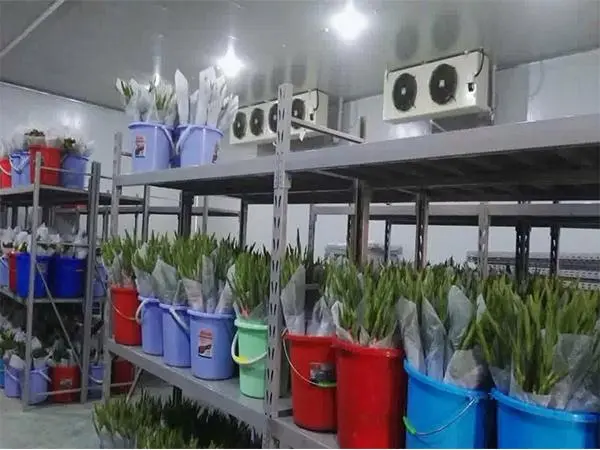
Blumen welken oft, wenn die Luftfeuchtigkeit zu niedrig bleibt, Der Luftstrom bläst zu stark, oder Stängel nehmen vor der Lagerung nicht genügend Wasser auf. Auch warme Blumen können schnell an Qualität verlieren, wenn sie ohne ausreichende Vorkühlung oder Flüssigkeitszufuhr in den Raum geladen werden.
2.Warum werden Blütenblätter braun?, weich, oder transparent?
Dieses Problem beginnt oft mit einer Kälteverletzung, Kondensation, grobe Handhabung, oder Krankheitsdruck. Empfindliche Blumen können Schaden nehmen, wenn die Raumtemperatur unter ihren sicheren Bereich fällt.
3.Warum wächst Schimmel in einem Blumenkühlraum??
Schimmel wächst schnell, wenn Wasser auf dem Boden steht, Abflüsse bleiben schmutzig, Behälter tragen Verunreinigungen, oder der Raum speichert zu viel Feuchtigkeit ohne ausreichende Luftzirkulation. Hohe Luftfeuchtigkeit hilft Blumen, Doch mangelnde Hygiene macht Feuchtigkeit zu einem Risiko.
4.Warum altern manche Blumen im selben Raum schneller als andere??
Verschiedene Blumen haben unterschiedliche Atmungsraten, Ethylenempfindlichkeit, und Temperaturtoleranz. Wenn Sie inkompatible Blumen zusammen lagern, Einige Produkte verlieren schneller an Qualität, selbst wenn der Raum stabil aussieht.
5.Warum beeinträchtigt häufiges Öffnen der Tür die Qualität der Blumen??
Jede Türöffnung bringt warme Luft herein und stört das Raumklima. Im hektischen Betrieb, Wiederholtes Be- und Entladen kann die Produkttemperatur erhöhen, erhöhen das Feuchtigkeitsungleichgewicht, und die Lagerstabilität verringern.
Warum die Lagerbedingungen für Blumen wichtig sind?
1.Niedrigere Temperaturen verlangsamen die Atmung
Schnittblumen atmen auch nach der Ernte weiter. Hohe Temperaturen beschleunigen die Alterung, verkürzt die Haltbarkeit in der Vase, und verringert die Blütenqualität. Niedrige und stabile Temperaturen verlangsamen die Atmung und sorgen dafür, dass die Blumen länger frisch bleiben.
2.Die richtige Luftfeuchtigkeit reduziert den Feuchtigkeitsverlust
Blumen verlieren nach der Ernte schnell Wasser. Niedrige Luftfeuchtigkeit bildet Blütenblätter, Blätter, und Stängel trocknen schneller aus. Eine gute Feuchtigkeitskontrolle trägt dazu bei, dass Blumen ihre Frische bewahren, Zu viel Feuchtigkeit kann jedoch das Schimmel- und Kondensationsrisiko erhöhen.
3.Ein ausgewogener Luftstrom hilft, die Blumen frisch zu halten
Der Luftstrom trägt dazu bei, die Raumbedingungen im gesamten Kühlraum gleichmäßig zu halten. Starke direkte Luft kann Blütenblätter und Blätter trocknen, besonders auf zarten Blumen. Ein ausgewogener Luftstrom kühlt die Ladung gleichmäßiger und trägt zum Schutz der Blütenqualität bei.

Wie wählt man den richtigen Blumenkühlraum aus?
| Punkt | Überprüfen |
|---|---|
| Speichervolumen | Zählen Sie Ihre täglichen Kartons, Eimer, oder Paletten. |
| Blumenmischung | Prüfen Sie, ob Sie eine Blumensorte oder gemischte Produkte lagern. |
| Lokales Klima | Überprüfen Sie die Temperatur, Feuchtigkeit, Stromversorgung, und Türöffnungshäufigkeit. |
| Luftfeuchtigkeit und Luftstrom | Überprüfen Sie die Feuchtigkeitskontrolle und Luftverteilung. |
| Isolierung und Layout | Überprüfungsgremien, Türen, Gänge, Gestelle, und Lademuster. |
| Support und Ersatzteile | Fragen Sie nach Anleitung, Unterlagen, Ersatzteile, und After-Sales-Support. |
So halten Sie Blumen im Kühlraum frisch?
1. Blumen frühzeitig vorkühlen
Feldwärme möglichst frühzeitig abführen bzw. transportieren. Lagern Sie warme Blumen nicht direkt zur Langzeitlagerung, sonst erwarten Sie gute Ergebnisse.
2. Blumen richtig hydrieren
Viele Blumen benötigen vor der Lagerung oder während der Handhabung eine ausreichende Wasseraufnahme. Eine schwache Flüssigkeitszufuhr verkürzt die Haltbarkeit in der Vase, auch wenn die Raumtemperatur korrekt bleibt.
3. Verwenden Sie saubere Verpackungen und Behälter
Verwenden Sie saubere Eimer, Ärmel, Boxen, und Gestelle. Eine gute Verpackung schützt die Blumen und lässt dennoch genügend Platz für die Luftzirkulation.
4. Kontrollieren Sie den Luftstrom um die Blumen
Lassen Sie die Luft um die Ladung strömen, ohne direkt auf die Blütenblätter zu blasen, Blätter oder Blütenköpfe. Ein starker direkter Luftstrom kann den Feuchtigkeitsverlust erhöhen und zu ungleichmäßigen Produktbedingungen führen.
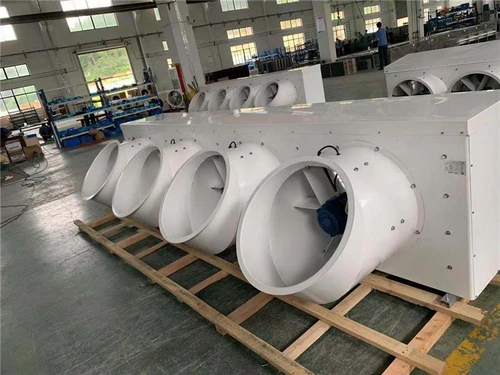
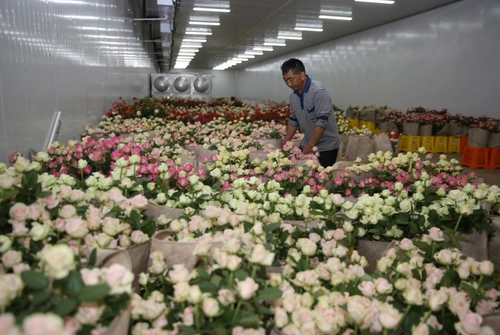
Der Verdampfer muss die Raumlast entfernen, ohne dass die Blumen einer schädlichen Luftgeschwindigkeit oder übermäßiger Austrocknung ausgesetzt werden. Überprüfen Sie die Spulenauswahl, Temperaturunterschied, Fanpflicht, Luftwurf, Regalanordnung und Auftaumethode zusammen. Eine hohe relative Luftfeuchtigkeit an einem Sensor beweist nicht, dass Blumen in jedem Gestell einem direkten Luftstrom oder Feuchtigkeitsverlust entgehen.
5. Überwachen Sie täglich Temperatur und Luftfeuchtigkeit
Nutzen Sie zuverlässige Kontrollen und überprüfen Sie die Raumleistung regelmäßig. Ein korrekter Sollwert bedeutet wenig, wenn sich die realen Raumbedingungen ständig ändern.
6. Lagern Sie Blumen nicht zusammen mit Produkten mit hohem Ethylengehalt
Lagern Sie Blumen nicht mit Produkten mit hohem Ethylengehalt im selben Kühlraum. Reife Bananen, Äpfel, Birnen, Avocados, Tomaten, Melonen, und andere reifende Produkte können die Alterung der Blüten beschleunigen und die Haltbarkeit in der Vase verkürzen.
Dieses Problem tritt häufig in Kühlräumen mit gemischter Nutzung auf, vor allem in Blumengeschäften, Großhandelsmärkte, und temporäre Lagerbereiche. Alte Blumen, beschädigte Stängel, gelbe Blätter, und Pflanzenabfälle können ebenfalls das Ethylenrisiko im Raum erhöhen.
Zum Schutz der Blütenqualität, Halten Sie Blumen von reifenden Früchten fern, beschädigte Produkte, und Pflanzenabfälle. Wenn ein Unternehmen sowohl Blumen als auch Obst und Gemüse verarbeitet, Es sollten separate Kühlräume oder klar getrennte Lagerzonen verwendet werden.
7. Reinigen Sie den Raum pünktlich
Saubere Böden, Abflüsse, Gestelle, Türen, und Kontaktflächen regelmäßig. Stehendes Wasser entfernen, beschädigte Blumen, und schmutzige Verpackung schnell.
Häufige Fehlerfälle
FAQs
Q1. Soll ich entwerfen? 1-3 Tage bzw 5-14 Tage?
Für 1-3 Tage, Konzentrieren Sie sich auf stabile Temperatur und einfachen Zugang. Für 5-14 Tage, Fügen Sie eine strengere Kontrolle der Luftfeuchtigkeit hinzu, Luftstrom, und Hygiene.
Q2. Kann der Verdampfer Blumen austrocknen??
Ja. Lassen Sie keine kalte Luft direkt auf die Blumen blasen. Sorgen Sie für einen gleichmäßigen Luftstrom im gesamten Raum.
Q3. Wie kann ich die Kondensation in einem Raum mit hoher Luftfeuchtigkeit reduzieren??
Kontrollieren Sie den Luftstrom, Drainage, und Oberflächentemperatur sorgfältig prüfen. Halten Sie den Raum sauber und vermeiden Sie Feuchtigkeitsansammlungen.
Q4. Kann ich Blumen mit Obst oder Gemüse lagern??
Standardmäßig, Trennen Sie ethylenempfindliche Blüten von reifenden Früchten und anderen Ethylenquellen.
Für die gemischte Lagerung ist eine bestätigte Warenkompatibilität erforderlich, einen geeigneten Temperaturbereich, kontrollierte Ethylenexposition und einen Betriebsplan. Verlassen Sie sich bei der Kontrolle des Ethylenrisikos nicht allein auf die Raumtemperatur.
Q5. Sind Glastüren für den stark frequentierten Einsatz geeignet??
Normalerweise nicht. Sie eignen sich besser für die Präsentation als für häufiges Öffnen und schweres Laden.
F6. Welche Abtaumethode eignet sich besser für einen Blumenkühlraum??
Wählen Sie eine Abtaumethode, die die Raumbedingungen stabil hält. Eine schlechte Abtaukontrolle kann zu größeren Temperaturschwankungen führen.
F7. Bleibt das System auch bei großer Hitze zuverlässig?, feuchte Gebiete mit instabiler Stromversorgung?
Es hält einer Umgebungstemperatur von maximal +45 °C stand, Das Design muss jedoch den örtlichen Gegebenheiten entsprechen. Eine Notstromversorgung oder die Planung von zwei Einheiten können die Zuverlässigkeit verbessern.
F8. Kann ich den Kühlraum später erweitern??
Ja, wenn Sie frühzeitig eine Erweiterung planen. Lassen Sie Platz für zukünftige Lagerung, Stromlast, und Ausrüstungs-Upgrades.
Abschluss
Ein Blumenkühlraum kann mehr als nur die Temperatur senken. Durch das richtige Temperaturgleichgewicht trägt es zum Schutz der Blütenqualität bei, Feuchtigkeit, Luftstrom, und Handhabung. Wenn Sie die Kühlraumgestaltung an Ihre Blumenarten anpassen, Speichervolumen, und örtlichen Gegebenheiten, Sie können Blumen frischer halten, Abfall reduzieren, und Speicher effizienter betreiben.