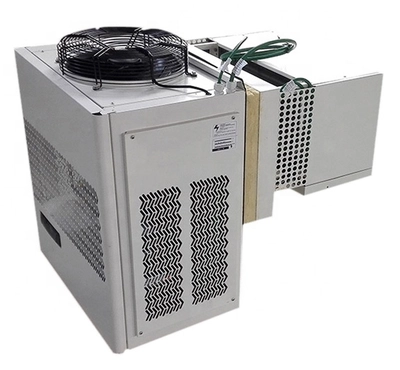
Cold room faults can lead to product loss, higher energy costs, and unexpected downtime if not handled quickly.
In this guide, we cover common cold room problems, how to identify them, and the practical steps you can take to troubleshoot them efficiently.
What to Do Immediately After a Cold Room Failure
When a sudden malfunction occurs, you can take emergency measures to minimize your losses.
1. Minimize door openings:
Restrict unnecessary entry and exit immediately, suspend non-essential loading or picking, and keep the cold room door closed as much as possible to reduce cold air loss.
2. Protect high-value and temperature-sensitive products first:
Prioritize seafood, meat, dairy products, pharmaceuticals, and other high-value or temperature-sensitive goods for transfer.
Products with lower spoilage risk can handle afterwards.
3. Record key operating data:
Document the current room temperature, set temp, alarm codes, time of failure, ambient temperature, and any visible signs such as unusual noise, water leakage, or frost buildup.
Accurate records can help service teams identify the problem more efficiently.
4. Carry out basic checks:
Check the power supply, circuit breaker, controller alarms, door sealing condition, evaporator frosting level, and whether the condenser area is blocked or poorly ventilated.
5. Isolate risks:
If there is water leakage, a burning smell, abnormal noise, repeated breaker trips, or any other sign of electrical or mechanical danger, stop forcing the system to run in order to prevent further damage.
6. Contact your supplier promptly:
Share on-site photos, videos, alarm information, and operating data as early as possible.
This can shorten communication time, improve diagnosis accuracy, and speed up the recovery process.
Quick diagnostic List
Next step, you should have a quick diagnostic by yourselves to define the basic faults of your cold room:
| Faults | Likely causes | What to check first | Who should handle |
|---|---|---|---|
| Cold room not cold enough | Door leaks, dirty condenser, low refrigerant, airflow blockage | Door closing, set temp, coil cleanliness, product stacking | Operator / Technician |
| Ice on evaporator | Defrost failure, door air leakage, high humidity, low airflow | Defrost cycle, gasket, fan, drain | Operator / Technician |
| Water on floor | Blocked drain, defrost issue, door seal leak | Drain line, pan, gasket, floor slope | Operator / Technician |
| Compressor not running | Power loss, breaker trip, controller fault, compressor fault | Breaker, power supply, controller alarm | Technician |
| Refrigerant leak | Corroded pipes, loose joints, vibration damage, poor installation | Oil stains, pressure drop, cooling performance, leak points | Technician |
| Condenser fan not running | Power failure, faulty motor, capacitor damage, wiring issue, obstruction | Fan blades, power supply, capacitor, motor temperature | Operator / Technician |
| Compressor making loud noise | Loose parts, worn bearings, liquid slugging, vibration, internal damage | Noise source, mounting bolts, piping vibration, oil level | Technician |
| Poor airflow | Blocked evaporator, fan failure, dirty filters, overstocking, poor layout | Fan operation, air path, product spacing, coil condition | Operator / Technician |
| Sensor malfunction | Sensor failure, loose wiring, wrong placement, controller error, calibration drift | room temperature, sensor position, wiring, actual room temperature | Operator / Technician |
| Power outage | Utility failure, tripped breaker, loose connection, overload, phase loss | Main supply, breaker, voltage, alarm display | Operator / Technician |
Absolutely, the quick diagnostic list is not specific enough, so we should know more details about the faults and solution.
Before You Diagnose a Fault
Confirm the operating stage before diagnosing a component fault. Normal cycling, defrost and recent loading can change temperature readings and equipment behavior.
| Check First | Why It Matters | What to Record |
|---|---|---|
| Cooling demand | The compressor may stop normally when the controller satisfies the cooling demand. | Actual room temperature, setpoint and controller status. |
| Defrost or recovery | Fan and compressor operation may differ from normal refrigeration. | Defrost status, start/end times, and fan and compressor status. |
| Recent product loading | A large load of warm produce can extend pull-down time without indicating equipment failure. | Product type, quantity, incoming temperature and loading time. |
| Recent changes | Maintenance, valve replacement, power interruptions or setting changes can help narrow the diagnosis. | Service history, changed components or settings, and when the problem began. |
| Safety warning signs | Smoke, unusual odors, suspected leaks or repeated protection trips require immediate attention. | Record visible warnings only from a safe location. Follow the site’s emergency procedure; do not approach hazardous equipment to collect data. |
Use these observations to choose the next troubleshooting step. Do not assume that an unusual reading means a component has failed.
Detailed Troubleshooting Sections
Cold Room not Cold Enough
| Fault detail | Possible causes | How to check | Solution | Need technician? |
|---|---|---|---|---|
| Cold room temperature is higher than set | Incorrect thermostat setting, dirty condenser coil, airflow block, door gasket damage, low refrigerant, sensor error | Check the controller setting, inspect condenser cleanliness, confirm the door closes tightly, review product stacking, compare current temperature with an independent thermometer | Adjust the set temp, clean condenser, improve airflow clearance, replace damaged door gaskets, and arrange refrigerant or sensor inspection | Yes, if cooling doesn't recover after basic checks |
Additional Note:
The most common causes are dirty condenser coils, frequent door opening, poor product stacking, and door air leaks. Start with the easiest checks first: setpoint, door closing, airflow path, and coil cleanliness.
If the room temperature keeps rising or stored goods are temperature-sensitive, move products if possible and contact a technician immediately.
Notice: For more troubleshootings about this faults, please check the post “Why Your Cold Room Not Cooling?”
Ice Buildup on Evaporator
| Fault detail | Possible causes | How to check | Solution | Need technician? |
|---|---|---|---|---|
| Ice or frost is building up on the evaporator coil | Defrost failure, high humidity, door gasket damage, evaporator fan failure, blocked drain, low airflow | Check whether the defrost cycle is working, inspect the gasket, confirm the fan is running, look for blocked air passages, inspect the drain line | Restore normal defrost operation, replace damaged gaskets, clear airflow obstructions, clean the drain, and remove excessive ice safely | Yes, if icing returns quickly or the defrost system is faulty |
Additional Note:
A failed defrost cycle and warm moist air entering through the door are the most common reasons.
First check whether the unit is in normal defrost mode or if frost is building abnormally fast.
If heavy icing reduces airflow or the room can’t hold temperature, maybe affect product quality.

Evaporator Coil Ice/Frost
Water leak
| Fault detail | Possible causes | How to check | Solution | Need technician? |
|---|---|---|---|---|
| Water is leaking inside or around the cold room | Blocked drain line, defrost water overflow, door gasket damage, excessive condensation, improper floor slope | Inspect the drain line and pan, check for ice blocking the drain, inspect door sealing, look at the floor area and defrost water path | Clear the drain, clean the pan, fix door sealing problems, improve drainage, and check the defrost system if leakage continues | Yes, if leakage repeated or linked to the defrost system |
Additional Note:
The most common issue is a blocked or frozen drain line.
Check where the water appears: near the evaporator, near the door, or across the floor.
If water creates slip hazards, mold risk, or repeated pooling, then shoud inspect system promptly.
Notice: For more troubleshootings about this faults, please check the post “Why Your Cold Room Leak Water?”
Compressor not Running
| Fault detail | Possible causes | How to check | Solution | Need technician? |
|---|---|---|---|---|
| The compressor doesn't start or stop completely | Power failure, tripped breaker, faulty controller, overload protection, wiring fault, compressor failure | Check the main power supply, breaker status, controller alarm, contactor condition, and whether the compressor is hot or silent | Reset power if safe, restore electrical supply, check controller settings, and arrange compressor or electrical diagnosis if the unit still doesn't start | Yes, in most cases |
Additional Note:
Often check power supply issues and control faults first, because they are easier to confirm than internal compressor damage.
If the breaker keeps tripping or the compressor overheats, stop trying to restart it repeatedly.
Continued restart attempts can worsen damage and increase downtime.

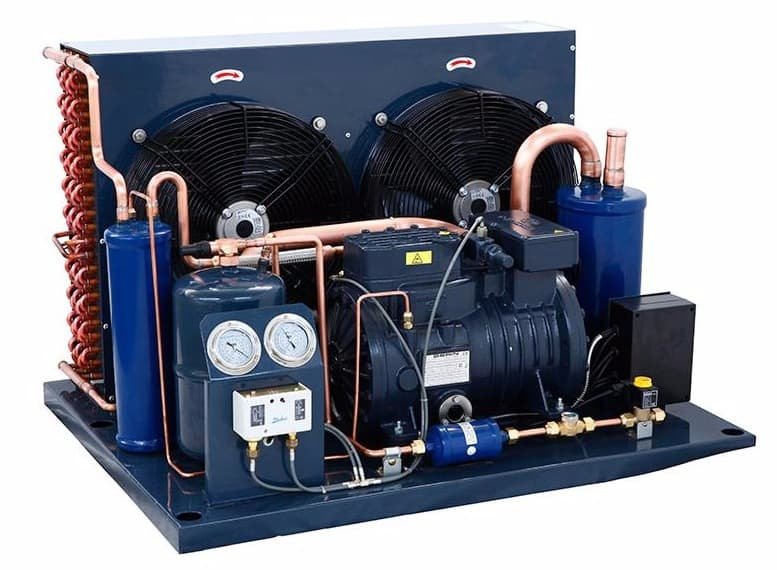
Copeland Compressor
Condenser Fan not Running
| Fault detail | Possible causes | How to check | Solution | Need technician? |
|---|---|---|---|---|
| The condenser fan does't spin or runs abnormally | Power issue, faulty motor, failed capacitor, loose wiring, physical obstruction, fan blade damage | Check whether the fan blade is blocked, inspect the power supply, listen for motor hum, inspect visible wiring, and feel for overheating around the motor area | Remove obstructions, replace damaged blades, repair wiring, and replace the motor or capacitor if faulty | Yes, if the motor or electrical parts are defective |
Additional Note:
A non-running condenser fan can quickly cause high condensing pressure and poor cooling performance.
First check for obvious blockage and confirm that the fan is receiving power.
If the compressor is still running while the fan is not, should arrange service quickly to avoid further damage.
Poor Airflow
| Fault detail | Possible causes | How to check | Solution | Need technician? |
|---|---|---|---|---|
| Air circulation inside the cold room is weak or uneven | Overstocking, blocked evaporator, fan failure, dirty filters, poor product layout, ice buildup | Check the distance between products and walls, inspect evaporator airflow, confirm fan operation, and look for blocked air outlets or returns | Rearrange stored goods, clear air paths, clean filters, restore fan operation, and remove ice if present | Yes, if airflow remains poor after layout and cleaning checks |
Additional Note:
Overstocking and blocked air passages are the most common causes.
Check whether cartons or pallets are blocking supply air or return air.
Poor airflow often causes uneven room temperature, which can lead to hidden product loss even when the controller looks normal.
Sensor Malfunction
| Fault detail | Possible causes | How to check | Solution | Need technician? |
|---|---|---|---|---|
| The displayed temperature is inaccurate or unstable because of sensor problems | Sensor failure, loose wiring, wrong sensor position, controller error, calibration drift | Compare the displayed temperature with a calibrated thermometer, inspect sensor placement, check wiring connections, and review controller alarms | Reposition the sensor, repair loose wiring, recalibrate, and replace the sensor if faulty | Yes, if need recalibration or replacement |
Additional Note:
A sensor problem can make the room appear normal on the display even when the actual storage temperature is wrong. First compare controller readings with an independent thermometer placed in the product zone.
If difference is large or readings fluctuate abnormally, product safety may be at risk.
Power Outage
| Fault detail | Possible causes | How to check | Solution | Need technician? |
|---|---|---|---|---|
| The cold room loses power fully or intermittently | Utility outage, tripped breaker, overloaded circuit, loose connection, phase loss, distribution fault | Check the main power supply, breaker panel, voltage, alarm display, and whether affect other equipment | Restore utility power, reset breaker, reduce overload, and inspect the electrical supply path | Yes, if power doesn't return normally or faults repeat |
Additional Note:
A complete outage is often easy to identify, but intermittent power loss is more dangerous because it causes unstable temperatures and hard-to-trace shutdowns.
Confirm whether outage is isolated to the cold room or affects the whole site.
During outage, keep doors closed as much as possible to reduce temperature rise.
Temperature Fluctuation
| Fault detail | Possible causes | How to check | Solution | Need technician? |
|---|---|---|---|---|
| Room temperature rises and falls too often | Sensor error, controller setting problem, door opening frequency, poor insulation, low airflow, refrigeration control fault | Review temperature records, compare actual and displayed temperature, inspect doors, airflow, insulation, and controller settings | Correct settings, improve door management, restore airflow, inspect insulation, and service control components if fluctuation continues | Yes, if fluctuation is frequent or severe |
Additional Note:
Frequent temperature swings usually indicate a control or usage problem rather than a single simple fault.
Check whether door opening patterns or overloading are causing sudden heat gain.
If the stored goods are highly sensitive, even short fluctuations may create quality risks.
Refrigerant Leak
| Fault detail | Possible causes | How to check | Solution | Need technician? |
|---|---|---|---|---|
| Refrigerant is leaking from the refrigeration system, causing poor cooling performance and unstable operation | Pipe corrosion, leaking joints, vibration damage, poor brazing, component wear, improper installation | Inspect the system for oil traces, check whether the room is cooling more slowly than usual, look for icing or abnormal temperature differences, and inspect common leak points such as joints, valves, and pipe connections | Identify and repair the leaking point, replace damaged pipes or joints, pressure-test the system, evacuate it properly, and recharge refrigerant to the correct amount after the leak is fixed | Yes |
Additional Note:
The most common causes are corroded pipework, loose joints, vibration-related damage, and poor installation quality.
Check visible oil residue on copper pipes, connectors, valves, and welded joints, because refrigerant leaks are often accompanied by oil marks.
Product loss may occur if the room temperature rises slowly and the issue is not noticed in time.
Contact a qualified technician immediately if cooling performance drops, the compressor runs longer than usual, or suspect a refrigerant leak.

Refrigerant Leak Test
Door Seal Problem
| Fault detail | Possible causes | How to check | Solution | Need technician? |
|---|---|---|---|---|
| The cold room door doesn't seal tightly | Worn gasket, door misalignment, frame damage, poor installation, debris on the seal surface | Inspect gasket condition, check for visible gaps, test door closing, and inspect frame alignment | Clean the sealing area, replace the gasket, adjust door alignment, and repair frame issues | Yes, if need alignment or frame repair |
Additional Note:
Door sealing problems are a very common root cause behind temperature loss, icing, and condensation.
Check for visible air gaps and signs of moisture around the door perimeter first. If the door doesn’t self-close correctly, should correct the issue quickly.
Strange Noise
| Fault detail | Possible causes | How to check | Solution | Need technician? |
|---|---|---|---|---|
| Unusual noise comes from the compressor, fan, piping, or unit cooler | Loose fasteners, fan blade contact, piping vibration, worn motor bearings, compressor internal wear, liquid slugging | Identify the noise source, inspect fan blades and guards, check mounting bolts, inspect piping supports, and observe when the noise occurs | Tighten loose parts, correct vibration points, replace damaged fans or motors, and inspect compressor condition if noise remains | Yes, if the source is internal compressor damage or repeated heavy vibration |
Additional Note:
Not all noise means major failure, but should never ignore sudden or increasing noise.
First determine whether the sound comes from the fan, compressor, or vibrating pipe.
If knocking, hammering, or metal friction is present, stop the unit and arrange inspection.
High Energy Consumption
| Fault detail | Possible causes | How to check | Solution | Need technician? |
|---|---|---|---|---|
| The cold room uses more electricity than normal | Dirty condenser, door air leaks, poor insulation, low airflow, incorrect set temp, overworked compressor, frequent defrost | Compare power bills and runtime, inspect door sealing, check coil cleanliness, review setpoint, airflow, and operating patterns | Clean coils, improve sealing, optimize set temp, improve airflow, reduce unnecessary door opening, and inspect system efficiency | Yes, if energy use stays high after basic corrections |
Additional Note:
Many users first notice an energy cost increase before they notice a cooling fault.
Check dirty coils, poor sealing, and set temp because these are common and easy to fix.
If energy use rises together with unstable temperature, the issue may be deeper than routine maintenance.
Technician-level Faults
Below faults need skilled knowledge in refrigeration industry, so only need technicians to handle.
Refrigerant Overcharge
| Fault detail | Possible causes | How to check | Solution | Need technician? |
|---|---|---|---|---|
| Too much refrigerant has been charged into the system | Incorrect servicing, charging without proper measurement, misdiagnosis after repair | Check system pressures, operating conditions, condenser performance, and evaporator behavior | Have the refrigerant charge corrected according to system requirements and operating data | Yes |
Additional Note:
This is a technician-level fault and shouldn’t handle by normal operators.
It is usually related to previous service work rather than daily operation.
Incorrect handling can damage efficiency and system performance.
Air in System
| Fault detail | Possible causes | How to check | Solution | Need technician? |
|---|---|---|---|---|
| Non-condensable gas is present in the refrigeration system | Incomplete evacuation, improper servicing, leakage during repair, poor charging procedure | Check abnormal pressure behavior, discharge temperature, and service history | Recover refrigerant if required, evacuate the system correctly, and recharge under proper service procedure | Yes |
Additional Note:
Air in the system is not a normal user-maintenance problem. It is usually related to installation or servicing quality.
If suspected, should check whole system with proper tools and procedures.
Notice: If you want to know more troubleshootings about this faults, please check the post “How to Remove Air Inside the Refrigeration System?”
TXV Blockage
| Fault detail | Possible causes | How to check | Solution | Need technician? |
|---|---|---|---|---|
| The thermostatic expansion valve is restricted or blocked | Moisture contamination, dirt in the system, filter drier problem, poor evacuation | Check superheat behavior, liquid line condition, filter drier status, and evaporator feeding pattern | Replace blocked components, correct contamination issues, and restore proper system drying and charging | Yes |
Additional Note:
This fault is usually tied to contamination or moisture inside the refrigeration circuit.
It is not suitable for end users to repair directly.
If the evaporator is starved and cooling drops sharply, need technician service.
For a structured check before adjusting the valve, see our guide to TXV superheat checks.
If the problem started after TXV installation or replacement, review our cold room TXV installation and commissioning guide.
Frozen Oil in Evaporator Pipeline
| Fault detail | Possible causes | How to check | Solution | Need technician? |
|---|---|---|---|---|
| Oil accumulates and affects refrigerant flow or heat exchange | Poor oil return, piping design issue, long-term operation imbalance, low load condition | Check cooling performance, piping condition, evaporator behavior, and service history | Diagnose oil return conditions, correct piping or operating issues, and clean the affected section | Yes |
Additional Note:
This is a deeper refrigeration circuit issue.
Most buyers and operators don’t need repair steps here, but they do need to know the symptom and when to call for service.
Short Cycling
| Fault detail | Possible causes | How to check | Solution | Need technician? |
|---|---|---|---|---|
| The compressor starts and stops too frequently | Control fault, sensor issue, low refrigerant, high head pressure, wrong settings, electrical problem | Observe cycle frequency, check controller settings, inspect sensor readings, and review system pressures | Correct settings, inspect controls and sensors, and diagnose refrigeration or electrical causes before restarting repeatedly | Yes |
Additional Note:
Short cycling increases wear and energy use very quickly.
First confirm that the problem is real and not just a normal defrost or pull-down cycle.
If repeated starts happen within short intervals, should inspect the unit before damage worsens.
Preventive maintenance checklist
Daily: Check the room temperature, alarm status, door closing, and any visible ice or water.
Weekly: Clean the coil and fan area, inspect door gaskets, and make sure airflow is not blocked.
Monthly: Inspect wiring, check sensor accuracy, look for signs of refrigerant leaks, and clean the drain system.
FAQs
Q1: How can I quickly determine which category of problem it is: compressor, refrigerant, controller, or door sealing?
Incorrect display or unstable reading usually points to controller/sensor issues; visible gaps, condensation, or frost near the door suggest sealing problems; weak cooling with long runtime may indicate refrigerant loss; repeated trips, failure to start, or loud mechanical noise often suggest compressor or electrical faults.
Q2: Which faults indicate that the unit selection is incorrect and requires reconfiguration, rather than repair?
If the cold room never reaches set temperature under normal load, runs almost continuously, recovers too slowly after door opening, or shows long-term short cycling/high energy use despite proper maintenance, the unit may oversize or undersize rather than simply faulty.
Q3: Which parts are most prone to failure, so need to prepare backup?
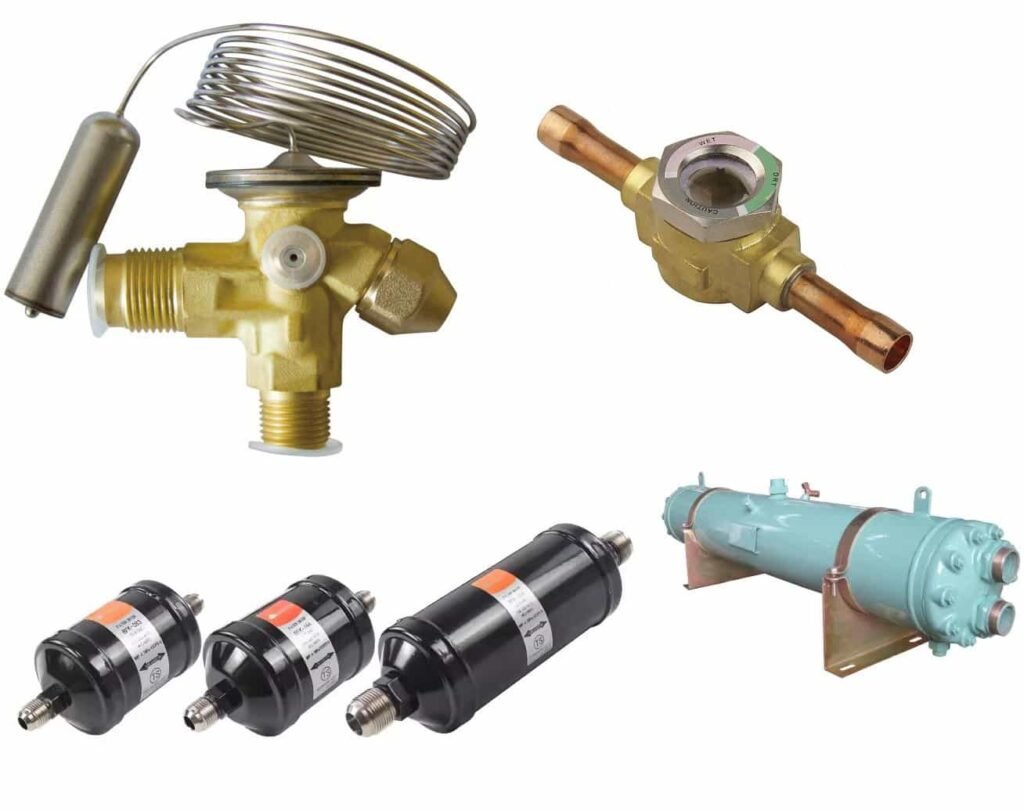
The most failure-prone parts: door gaskets, evaporator fan motors, condenser fan motors, sensors/probes, controllers, contactors/capacitors, drain heaters, dryer, valve, and defrost-related components.
Q4: What are the differences in common faults between different temperature cold room (For example: 0~5°C chiller, -18°C freezer)?
Chillers more often suffer from poor cooling, condensation, and door air leakage, while freezers are more prone to evaporator icing, defrost problems, frozen drains, and door frost.
Conclusion
In summary, understanding common cold room faults and taking the right action early can help reduce downtime, prevent product loss, and improve system reliability.
A clear troubleshooting process, combined with regular maintenance, can make cold room operation more efficient and cost-effective.