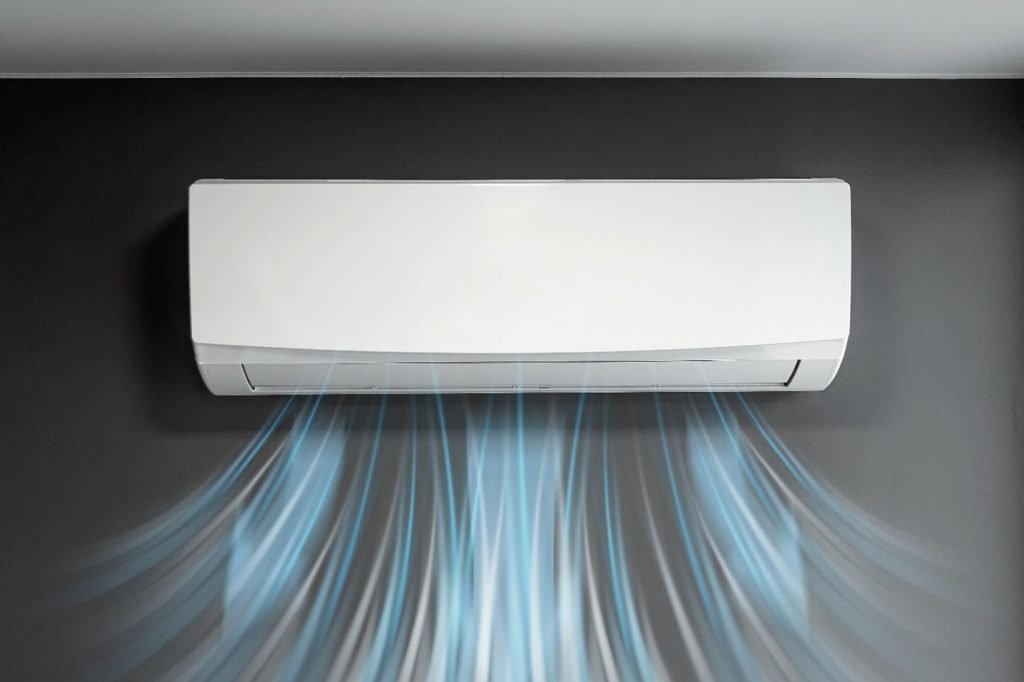
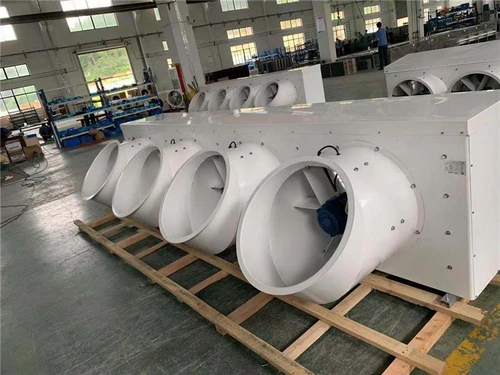
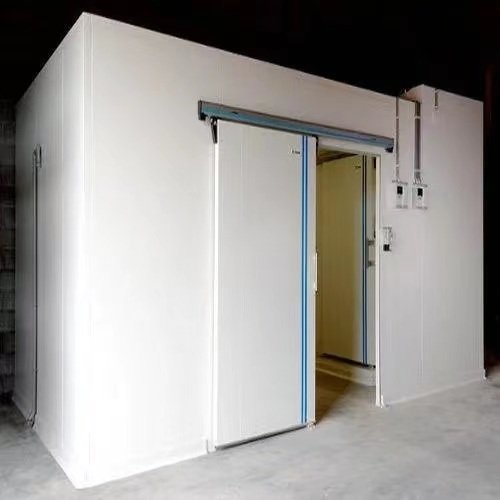
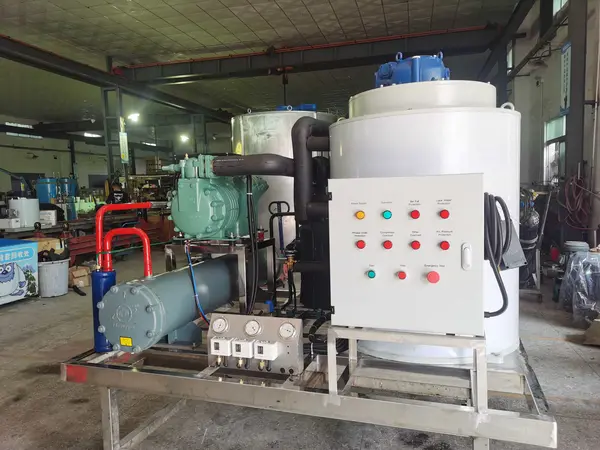
En el mundo de HVACR (Calefacción, Ventilación, Aire acondicionado, y refrigeración) sistemas, El distribuidor de refrigerante desempeña un papel crucial, aunque a menudo pasado por alto.. Si estás buscando «¿Qué es un distribuidor de refrigerante?,» «¿Cómo funciona un distribuidor de refrigerante?,» o «tipos de distribuidores de refrigerante,» esta guía cubre todo lo que necesitas saber.
Si eres un técnico de HVACR, ingeniero, o propietario de casa solucionando problemas de su unidad de aire acondicionado, Comprender el distribuidor de refrigerante puede optimizar la eficiencia del sistema., evitar averías costosas, y garantizar un enfriamiento uniforme.
Lo desglosaremos paso a paso., desde lo básico hasta la resolución de problemas avanzada.
Introducción al distribuidor de refrigerante
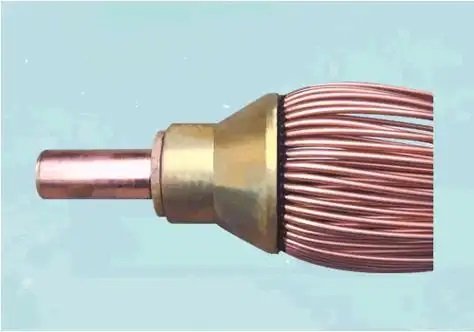
El distribuidor de refrigerante es un dispositivo mecánico vital en refrigeración y aire acondicionado sistemas, Se utiliza específicamente para dispersar uniformemente refrigerante líquido y vapor a través de múltiples circuitos paralelos en un serpentín de evaporador..
A menudo comparado con un «cabezal de ducha» para refrigerante, asegura un flujo equilibrado, evitando puntos críticos o ineficiencias que podrían provocar un enfriamiento desigual o tensión en el sistema.
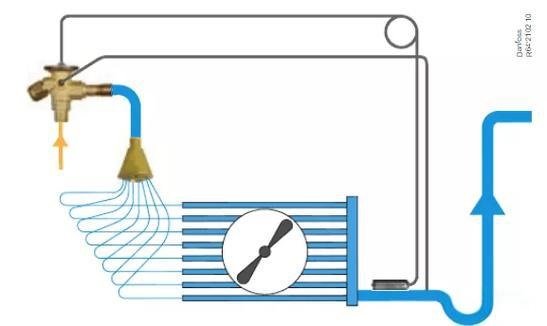
En configuraciones HVACR, el distribuidor se encuentra entre la válvula de expansión termostática (TXV) y el evaporador, manejo de refrigerante saturado (una mezcla de liquido y gas) para promover una absorción óptima del calor.
¿Por qué esto importa??
Una mala distribución puede provocar el congelamiento del serpentín., eficiencia reducida, o daño al compresor.
Para aquellos que consultan «función del distribuidor de refrigerante,» Es esencialmente el ecualizador el que maximiza la transferencia de energía., mejorar el rendimiento general del sistema hasta entre un 20 y un 30 % en evaporadores de circuitos múltiples. Esta guía lo desmitifica tanto para principiantes como para profesionales..
Historia y evolución de los distribuidores de refrigerantes
La historia del distribuidor de refrigerante refleja la evolución más amplia de los refrigerantes y la tecnología HVACR., que se remonta a finales del siglo XIX cuando surgió la refrigeración mecánica. En 1876, El ingeniero alemán Carl von Linde patentó los procesos de licuefacción de gases, sentando las bases para los sistemas modernos. Los primeros distribuidores eran rudimentarios., Confiando en colectores simples sin mezcla precisa..
En la década de 1920, con la invención de los clorofluorocarbonos (CFC) por Thomas Midgley, Los distribuidores evolucionaron para manejar refrigerantes más volátiles como el R12.. Las décadas de 1970 y 1980 vieron avances en medio de preocupaciones ambientales., cambio de CFC a HCFC (p.ej., R22). Los distribuidores incorporaron boquillas para un mejor control de la velocidad., abordar problemas como el flujo desigual en bobinas más grandes.
Hoy, con la eliminación progresiva del R22 en virtud del Protocolo de Montreal y el aumento de los HFC como el R410a, R32, R404, etc.. Los distribuidores modernos cuentan con orificios intercambiables y diseños venturi para bajo GWP. (Potencial de calentamiento global) refrigerantes. Las tendencias futuras apuntan a adaptaciones ecológicas para los sistemas basados en CO2, enfatizando la sostenibilidad en la evolución de HVACR.
Cómo funciona un distribuidor de refrigerante
Comprensión «cómo funciona un distribuidor de refrigerante» comienza con su colocación en el ciclo de refrigeración. Después de que la TXV mide refrigerante en el distribuidor, El dispositivo utiliza una boquilla para acelerar el flujo., creando una caída de presión que mezcla las fases líquida y de vapor de manera homogénea.
Esta mezcla de alta velocidad luego se ramifica en tubos o circuitos capilares., asegurando una evaporación uniforme en todo el serpentín.
Pasos clave en operación:
- Fase de entrada: El refrigerante saturado ingresa desde la TXV a presión moderada.
- Cámara de mezcla: Los deflectores internos o efectos venturi agitan el refrigerante., logrando 50-70% Calidad del vapor para una distribución uniforme..
- Distribución de salida: Los tubos alimentan el evaporador., donde el refrigerante absorbe calor, convirtiéndose en vapor antes de regresar al compresor.
- Dinámica de presión: El tamaño adecuado mantiene una 5-10 caída psi, evitando la estratificación (acumulación de líquidos).
En evaporadores multicircuito, esto previene «mala distribución,» donde algunas secciones se sobrealimentan mientras que otras mueren de hambre, conduciendo a ineficiencias. Para estudiantes visuales, Imagínelo como un policía de tránsito dirigiendo el refrigerante. «carros» para evitar atascos.
Tipos de distribuidores de refrigerante
No todos los distribuidores de refrigerante son iguales: la selección depende del tamaño del sistema, Tipo de refrigerante, y diseño del evaporador. Aquí hay un desglose de los tipos comunes.:
| Tipo | Descripción | Mejor para | Características clave |
|---|---|---|---|
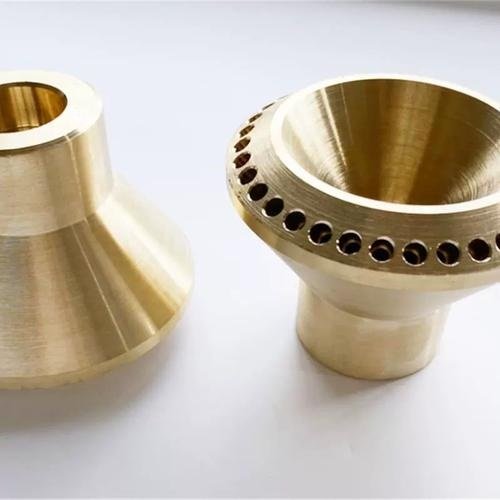
| Boquilla | Utiliza orificios intercambiables para controlar el flujo.; se parece a una gorra perforada | Aplicaciones flexibles como unidades de aire acondicionado comerciales | Tamaño ajustable, modificaciones fáciles; maneja bien el R-410A |
| Venturi-Flo | Unidad de una pieza con boquilla venturi para mezcla natural mediante aumento de velocidad | Sistemas de alta capacidad | Sin piezas sueltas, reduce la obstrucción; ideal para R-134a |
| RD (Distribuidor de líquidos) | Estilo Danfoss con ramificación uniforme para evaporadores multisección | refrigeración industrial | Compatible con R-404A, R-407C; asegura bajas fracciones de vacíos |
| Entrada de brida (p.ej., Tipos 1109/1124) | Se atornilla directamente a la salida TXV con brida macho | Sistemas integrados en Sporlan | Compacto, resistente a vibraciones; para unidades residenciales más pequeñas |
| Distribuidores de orificios | Diseño básico similar a un cabezal de ducha con orificios fijos | Configuraciones de presupuesto | Simple, rentable; común en sistemas R-22 más antiguos |
Elija según el refrigerante (p.ej., El R410a necesita una mayor tolerancia a la presión) y recuento de circuitos: hasta 12 para bobinas grandes.
Importancia en los sistemas HVACR
El distribuidor de refrigerante no es negociable para lograr eficiencia en sistemas HVACR modernos. Promueve la transferencia uniforme de calor., Reducir el uso de energía al garantizar que cada sección del serpentín evapore el refrigerante de manera óptima.. sin eso, los sistemas sufren:
- Enfriamiento desigual: Puntos fríos/calientes en las habitaciones.
- Sobrecarga del compresor: Inundación por flujo desequilibrado.
- Pérdidas de eficiencia: Arriba a 15% facturas de energía más altas.
En entornos comerciales, Prolonga la vida útil del equipo minimizando el estrés térmico.. Para búsquedas con conciencia ecológica como «Ahorro de energía en el distribuidor de refrigerante.,» tenga en cuenta que admite transiciones de bajo PCA, alineándose con las regulaciones de la EPA.
Guía de instalación para distribuidores de refrigerante
La instalación adecuada del distribuidor de refrigerante es fundamental para evitar fugas o restricciones.. Siga siempre las especificaciones del fabricante. (p.ej., Directrices de Parker Sporlan). Herramientas necesarias: llave dinamométrica, flujo, soplete de soldadura.
Paso a paso:
- Prepare el sistema: Evacuar refrigerante; aislar el evaporador.
- Montar el distribuidor: Colóquelo horizontalmente sobre el cabezal de la bobina., 6-12 pulgadas de TXV. Asegure con abrazaderas.
- Conectar la entrada: Suelde o atornille a la salida TXV; utilizar ASC (Selector automático de distribuidores) si es necesario para la retención de la boquilla.
- Conecte los tubos de salida: Cortar a medida (circuitos de bobinas coincidentes); extremos ensanchados y conectados con uniones. Asegúrese de que las longitudes sean iguales para mantener el equilibrio..
- Aislar y probar: Envolver con espuma; prueba de presión en 300 psi, luego verifique las fugas con nitrógeno.
- Cargo y Comisión: Agregar refrigerante; monitorear el recalentamiento (8-12°F objetivo).
Para propina: Para R410a, use tubos más largos para una mejor mezcla. Consulte los códigos locales para mayor seguridad..
Consejos de mantenimiento para una vida más larga
El mantenimiento regular del distribuidor de refrigerante evita 80% de fracasos. Programar controles semestrales.
- Inspección visual: Busque corrosión, accesorios sueltos, o residuos de aceite que indiquen fugas.
- Orificios limpios: Enjuague con solvente si está obstruido.; evitar abrasivos.
- Revisar la tubería: Asegúrese de que no haya torceduras; reemplazar si tiene diámetro reducido.
- Puesta a punto de todo el sistema: Verifique la función TXV y el sobrecalentamiento; Ajuste el distribuidor si se detectan desequilibrios en el flujo..
- Pureza del refrigerante: Utilice filtros para evitar residuos.; cambiar anualmente.
Para «limpieza del distribuidor de refrigerante,» un simple soplado de nitrógeno es suficiente para la mayoría de los tipos. Esto prolonga la vida a 10+ años.

Problemas comunes y solución de problemas para el distribuidor de refrigerante
La resolución de problemas del distribuidor de refrigerante a menudo revela restricciones o mal funcionamiento.
Síntomas: Baja presión de succión, congelación de la bobina, o temperaturas desiguales.
| Asunto | Causas | Solución de problemas |
|---|---|---|
| Distribución desigual | Boquilla obstruida o longitudes de tubo desiguales | Medir flujos; cambiar el tamaño de los orificios; igualar el tubo |
| Congelación | Cargo bajo o restricción | comprobar el sobrecalentamiento; descongelar y recargar; inspeccionar en busca de escombros |
| Fugas | Fallo de unión soldada | Soldar reparar o reemplazar; usar 45% soldadura de plata |
| Mala mezcla | venturi desgastado | Reemplazar distribuidor; caída de velocidad de prueba |
Usar medidores: Apunte a un sobrecalentamiento de 5 a 10 °F. Si es persistente, Llame a un profesional para evitar daños al compresor..
Conclusión
Dominar el distribuidor de refrigerante desbloquea la eficiencia, rendimiento confiable de HVACR. Desde su mecánica impulsada por Venturi hasta la versatilidad del tipo de boquilla, este componente garantiza que su sistema funcione sin problemas.
Recordar: Instalar correctamente, mantener diligentemente, y solucionar problemas de forma proactiva. A medida que los refrigerantes evolucionan hacia la sostenibilidad, los distribuidores se adaptarán: manténgase informado a través de recursos como ASHRAE.
Para más información «Mejores prácticas para distribuidores de refrigerante,» marcar esta guía como favorita.