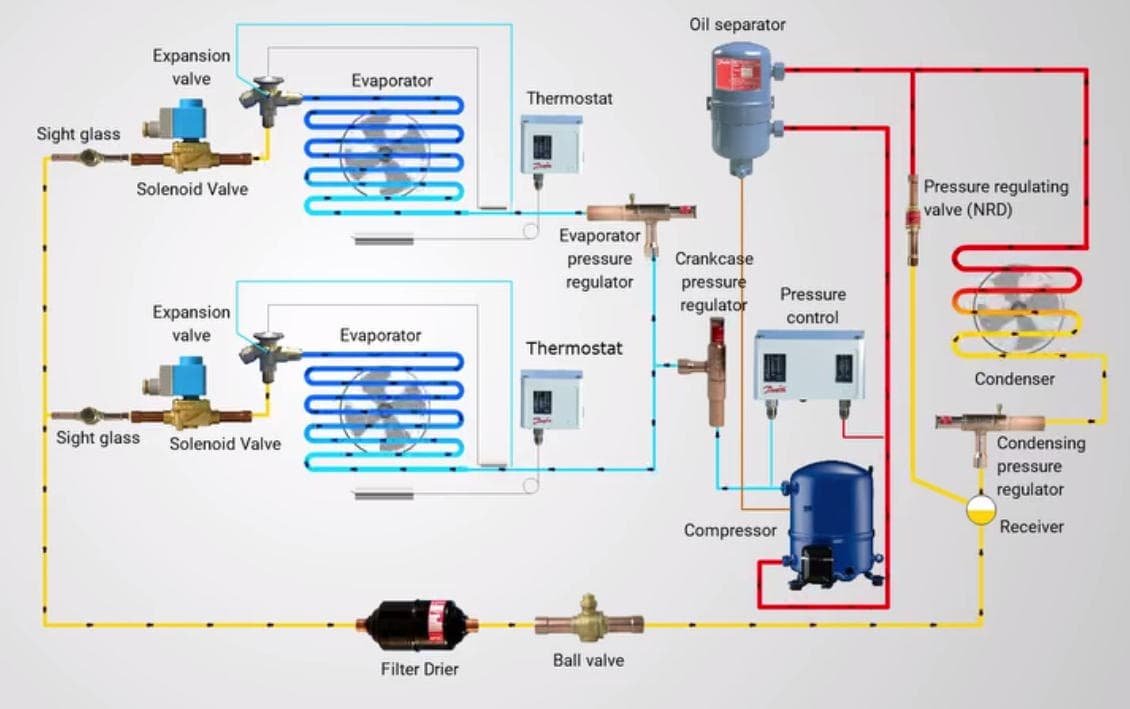
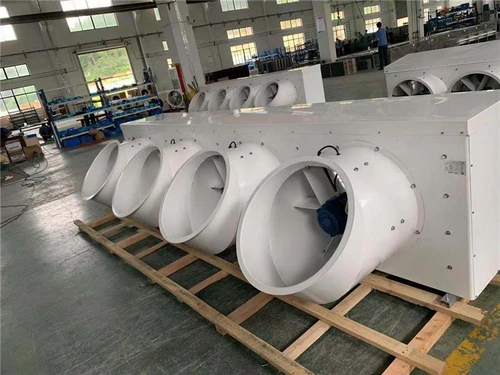
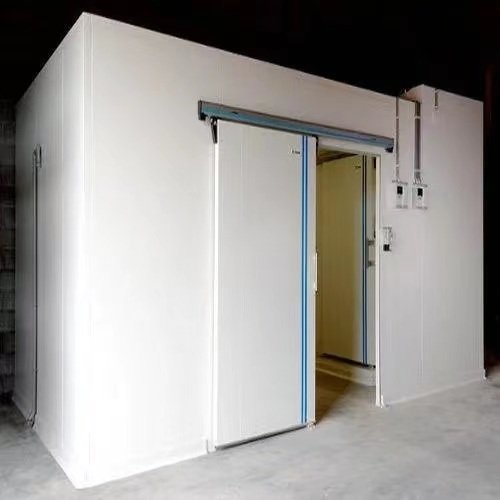
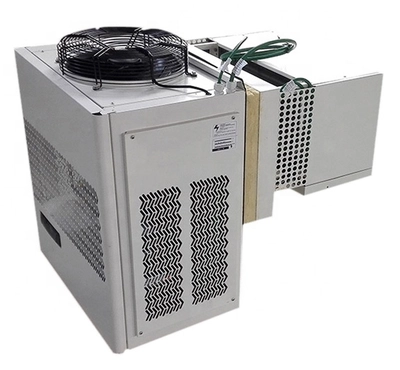
Running multiple cold rooms with single condensing unit means one outdoor condensing unit supplies refrigerant to two or more evaporators (유닛 쿨러), typically one evaporator per cold room, through a shared liquid line header and suction header.
This approach can reduce installed cost, 공간 절약, and simplify maintenance compared with installing a separate condensing unit for each room—when the rooms are compatible in temperature and operating conditions.
The key design requirement is independent room control: each cold room must be able to “call” for cooling without forcing other rooms to overcool or lose control.
When this design works
This design works best when all rooms operate at similar temperature setpoints and therefore can share compatible temperatures (same evaporating temperature “SST”) without major compromises.
If one room is a freezer and another is a cooler, a basic single-circuit shared condensing unit usually struggles because the suction pressure must satisfy the coldest room, and that can cause the warmer room to short-cycle, freeze product, or require special controls beyond a simple setup.
It also becomes risky if the application demands high redundancy (예를 들어, critical pharmaceutical storage), because one condensing unit becomes a single point of failure for multiple rooms.

Core concept: multiple evaporators with independent control
In a multi-room, single-condensing-unit setup, the condensing unit is the “engine,” and each cold room’s evaporator is a separate cooling zone.
A common and practical way to control each zone is a thermostat in each room that opens/closes a liquid line solenoid valve feeding that room’s evaporator, providing on/off refrigerant flow per room.
This is often paired with a pump-down sequence so the compressor shuts off based on suction pressure after solenoids valve close, which helps prevent liquid refrigerant migration to the compressor during off cycles.
Step-by-step design and installation
단계 1: Confirm temperatures and choose SST
Start by listing each cold room’s target temperature, allowable temperature swing, humidity sensitivity (fresh produce vs frozen foods), and expected door-opening frequency, because these factors drive the evaporator selection and the required SST.

In a single-suction system, you typically pick one SST that can satisfy the coldest or most demanding room, then manage warmer rooms by cycling their solenoid valves (and fans/defrost strategy if needed).
Practical guidance: the closer the rooms’ setpoints are to each other, the easier it is to maintain stable control, avoid icing problems, and keep energy use reasonable.
단계 2: Load calculation and equipment sizing
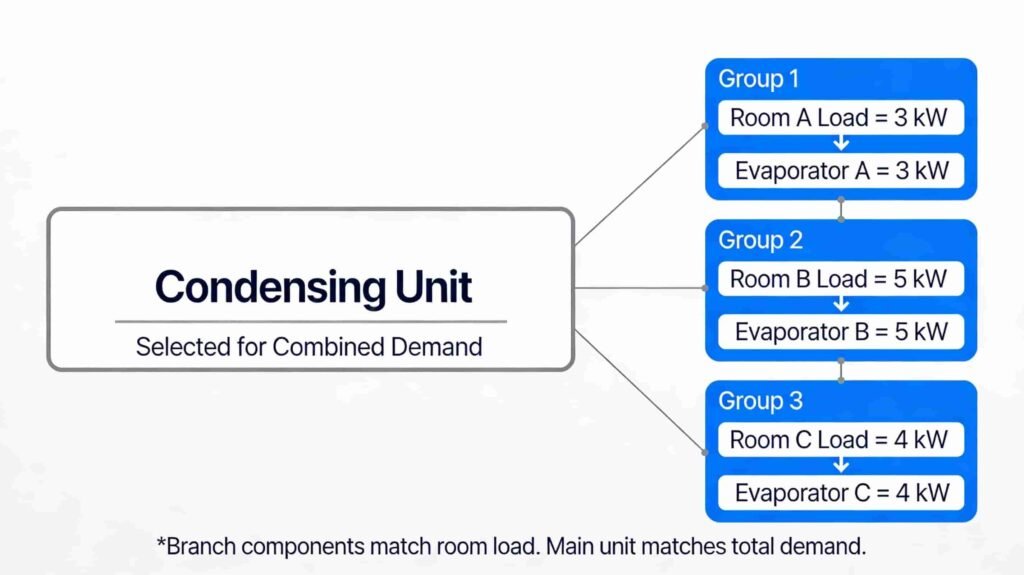
Correct sizing starts with two numbers: (1) each room’s heat load and (2) the maximum simultaneous load when multiple rooms pull down at the same time.
Size each evaporator for its room load and operating temperature, because airflow, coil selection, and refrigerant feed must match that specific space.
Then size the condensing unit for the combined capacity at the selected SST and design ambient, considering that multiple rooms can call together after door openings or during initial pull-down.
Selection must respect the condensing unit manufacturer’s application envelope and installation guidance, because improper application can lead to unstable head pressure control, oil return issues, and nuisance trips.
단계 3: Refrigerant piping layout (multi-evaporator basics)
1) A typical layout uses:
-
One liquid line from the condensing unit that becomes a liquid header, then branches to each evaporator.
-
One suction header that collects suction vapor from each evaporator branch and returns to the compressor.
2) Line sizing: header vs branches
Branch lines should be sized for each evaporator’s capacity, while the main header(에스) must be sized for the total combined flow at full load.
Good piping design also aims to keep pressure drops reasonable and maintain refrigerant velocities needed for oil return under both full-load and part-load conditions.
3) Oil return and traps
Oil return is a major design concern because oil circulates with refrigerant and must return to the compressor reliably.
Guidance for suction line “P” traps notes they are used to help oil return in vertical risers and that a trap is required whenever the compressor is above the evaporator, with special considerations like inverted traps for certain suction header configurations.
Oil Return
또한, suction lines are commonly pitched in the direction of refrigerant flow to promote oil return, which is emphasized in refrigerant piping design guidance.
4) Insulation and condensation control
Suction lines commonly require insulation to reduce heat gain and prevent condensation (“sweating”), which improves performance and reduces water damage risk around the building.
단계 4: Room-by-room control (thermostat + liquid line solenoid)
To let each cold room operate independently, 설치하다:
-
One thermostat (or electronic room controller) per cold room.
-
One liquid line solenoid valve per evaporator (typically installed in the liquid line feeding the evaporator), controlled by that room’s thermostat.
A solenoid valve is an electronically operated valve used to control flow in a fully open/fully closed mode, making it suitable for on/off control at each evaporator.
When a room reaches setpoint, its thermostat closes the solenoid, stopping refrigerant flow to that evaporator while other rooms can continue running if they still call for cooling.
Expansion valves still matter
Even with solenoid control, each evaporator typically needs a proper refrigerant metering device (commonly a TXV/TEV) selected for refrigerant type and capacity, because stable superheat control depends on correct feed and distribution at the evaporator.
TXV
단계 5: Pump-down control (protect the compressor)
Pump-down control is widely used with liquid line solenoids because it reduces the chance of liquid refrigerant migrating into the compressor during off cycles and causing flooded starts or oil dilution.
In a pump-down sequence, when the thermostat is satisfied it closes the liquid line solenoid; the compressor continues to run and “pumps” refrigerant from the low side toward the condenser/receiver until suction pressure drops to a low-pressure control cut-out setting.
Key control components include:
-
Liquid line solenoid(에스), opened by a cooling demand and closed when satisfied.
-
A properly set low-pressure control near the compressor that shuts the compressor off at the appropriate suction pressure (not “to zero”), which is highlighted as an important detail in pump-down explanations.
Important system requirement: pump-down works properly only when the high-side storage (condenser and/or receiver) can safely hold the system’s refrigerant charge during pump-down, which is noted in pump-down descriptions.
단계 6: Defrost planning for multiple evaporators
Defrost must be planned per cold room because frost formation varies by humidity, door openings, and coil temperature.
Cold storage design guidance describes timer defrost (time initiated/time terminated) as a common method and also discusses demand defrost approaches, highlighting that defrost strategy is a real design decision—not an afterthought.
In multi-room systems, stagger defrost schedules so not all evaporators go into defrost at the same time, which helps maintain suction stability and avoids large temperature swings across the facility.
단계 7: Commissioning checklist (what to verify)
Commissioning a multi-evaporator system is about proving three things: refrigeration tightness, correct refrigerant charge/operating conditions, and correct control behavior per room.
Use a practical checklist:
1. Pressure test and leak check before charging, following the condensing unit manufacturer’s installation/maintenance requirements.
2. Evacuate properly and confirm vacuum holds, because moisture and non-condensables create reliability issues.
3. Charge the system and confirm stable subcooling/superheat per manufacturer guidance, because multi-evaporator systems can be sensitive to charge and feed.
4. Confirm each thermostat opens the correct solenoid and only that room starts cooling, proving room-by-room independence.
5. Test pump-down: close a solenoid, watch suction drop, and verify the low-pressure control shuts the compressor off at the intended cut-out.
6. Test “multiple rooms calling” and “single room calling” modes, because oil return and suction stability must work across part-load operation.
Common mistakes and troubleshooting tips
Mistake 1: Mixing freezer and cooler rooms on a simple shared SST
If a warmer room shares suction pressure with a freezer SST, it can overcool, freeze coils, or require excessive cycling to maintain temperature.
Fix options include separating systems, adding more advanced capacity/pressure regulation controls, or redesigning the architecture to match the application constraints.
Mistake 2: Skipping solenoids (or wiring them wrong)
Without a dedicated solenoid controlled by each room thermostat, refrigerant can feed a satisfied evaporator, leading to temperature overshoot and migration issues.
Verify that each solenoid is correctly oriented and controlled, since the on/off nature of solenoids is central to independent zoning.
Solenoid Valve
Mistake 3: Poor suction piping (oil return problems)
Oil return issues often show up as noisy operation, high compressor wear, or poor performance during part load when only one small room is calling.
Follow suction line practices such as correct pitch and appropriate traps for risers to help oil return, especially when elevation changes exist.
Mistake 4: Defrost not coordinated
If defrost is poorly scheduled, rooms may warm excessively or the system may behave erratically as multiple evaporators enter defrost simultaneously.
Correct by using a clear defrost plan (timer or demand) and staggering defrosts to match actual frost conditions and room usage.
FAQ
1) Can one condensing unit run two or more cold rooms?
예, one condensing unit can serve multiple evaporators, but the rooms should be temperature-compatible because a simple design usually shares one suction pressure level.
2) Do I need a liquid line solenoid for each cold room?
For independent control, a common approach is one thermostat and one liquid line solenoid per evaporator/room, so each room can stop refrigerant flow when it reaches setpoint.
3) What is “pump-down,” and why is it used?
Pump-down is a control method where solenoid closure stops refrigerant feed and the compressor continues running until a low-pressure control shuts it off, reducing liquid refrigerant migration risk during off cycles.
4) How do I avoid oil return problems in a multi-room system?
Oil return depends on correct suction line sizing, proper pitch, and traps/inverted traps in the right locations, especially with vertical risers and varying load conditions.

If the number of rooms, target temperatures, and distances from the condensing unit are provided, the post can be upgraded with a “sample piping and controls” section (example layout, valve list, and a commissioning test script) tailored to that scenario.
결론
Bringing multiple cold rooms under one condensing unit can be a smart, cost-effective way to build a multi-zone cold storage system—if the design matches the application.
The winning formula is temperature compatibility, correct capacity selection, and a piping layout that supports stable refrigerant flow and reliable oil return. Just as important, each room must have independent control, typically using a room thermostat and a dedicated liquid line solenoid valve, so one room can satisfy without forcing the others to overcool.
When pump-down control, defrost scheduling, and safety controls are planned from the start, you get better temperature stability, fewer nuisance trips, and longer equipment life.
설치 전, validate load assumptions and operating conditions, then commission carefully by testing each room individually and all rooms together.
Done right, one condensing unit can reliably serve multiple cold rooms with simple operation and efficient performance.
다른하실 말씀 있나요?
환영합니다 메시지를 남기거나 다시 게시.